
If emerging and advanced technologies can help with nearshoring, as suggested here, why can’t we further enhance the trio of people, processes, and technologies for reshoring? After all, America has been attempting to revive its manufacturing sector for some time now, with limited success.
In this paper https://lnkd.in/gumAdnuT, the authors propose a framework combining virtual reality (VR) and artificial intelligence (AI) to support education, design, and decision-making in advanced manufacturing systems, particularly tailored to Mexico’s nearshoring opportunities.
The VR + AI framework consists of three interlinked modules:
A. Robotic Platform Design & Modeling
Users can design, simulate, and test robotic platform prototypes in VR. Different configurations and conditions are tested virtually to see how they perform.
Virtual Manufacturing Company / Factory Simulation
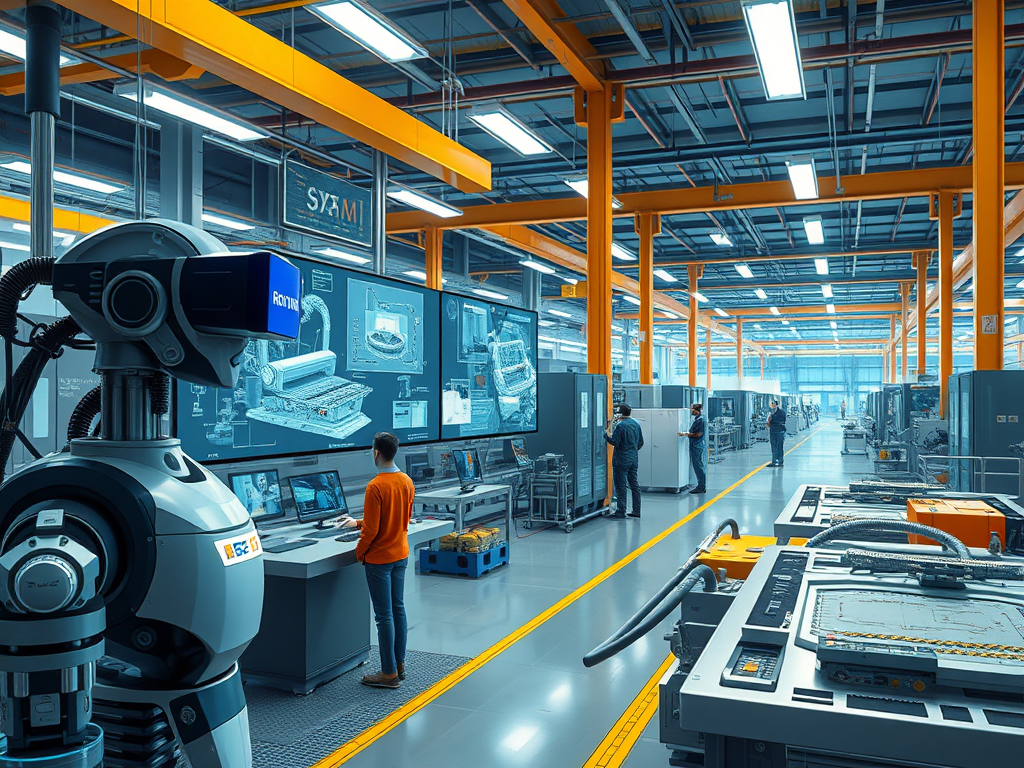
A virtual factory environment is created where users can explore manufacturing processes (assembly lines, resource flow, machinery, layouts). The idea is to let learners or decision makers experiment with process design in a realistic, risk-free setting.
B. Product Evaluation & Feedback Loop
Once a design is built virtually, it’s evaluated (performance, customer criteria, feasibility). Based on evaluation, feedback is used to iterate and refine designs. The framework supports this cycle of design → test → redesign.
Additionally, the framework integrates simulation, discrete-event modeling, and probabilistic modeling in the factory environment to account for process variability, failure/repair rates, throughput, etc.
But like everything else, technology will not lead to nearshoring or reshoring. It is all about labor cost, unless……unless, you can build a cohesive system, combining people, processes and technology, which makes manufacturing domestically cost-effective. That is what Industrial AI is all about. Because in capitalism, businesses exist for profits.
Give me a product that is currently being manufactured in China and I am sure we can design a system that has a lower per-unit manufacturing cost. Sounds insane?
Not exactly, because there will be a significant initial investment in automation, redesigning the manufacturing process, and training for a very specific set of operators. So, you can drive the labor cost down, but the investment in machinery and redesign has to be taken into account as well.
Even China understands that the labor cost advantage is diminishing fast with the advent of technology (https://lnkd.in/g3iWxgmk). Being a strategic nation, it understands that if you master how to design Industrial AI systems with craftsmanship, you can unleash a manufacturing revolution like no other.
The answer to the reshoring question is Industrial AI.

 Designed Analytics Blog