
As my stint at my home (country) ends and the time to fly back to my family nears, there are a lot of observations that I will carry with me. One of them obviously pertains to technological advances since I last visited India. I have wanted to write about many of them, but weirdly enough, my MacBook Screen suddenly decided to die a week ago. It suddenly removed itself from my Apple account devices, then added itself back again (sentient? 😃). After that, it has gone nuts 😂. It wakes up only when it wants to. Maybe the laptop is missing the U.S. and wants to go home 😄.
While I can edit videos on other devices, typing on iPad is not my forte. This morning, I surprisingly found the laptop screen alive, with minimal flickers and lines, so decided to write.
As I have indicated in many articles and posts, I have been impressed with the technological advancements in multiple domains and the convenience that these advances have brought. One of those areas is the convenience to order food of your liking from the comfort of your home. For someone who stayed in hotels most of the time, it was extremely useful. This also led to an interesting experience.
During my approximately month long stay so far, I ordered food delivery nearly 80+ times. One amazing aspect was that no matter how complicated your order was, every local outlet shipped it with accuracy. However, there was one chain that shipped inaccurate orders 2/3rd of the time. These were orders from Pizza Hut.
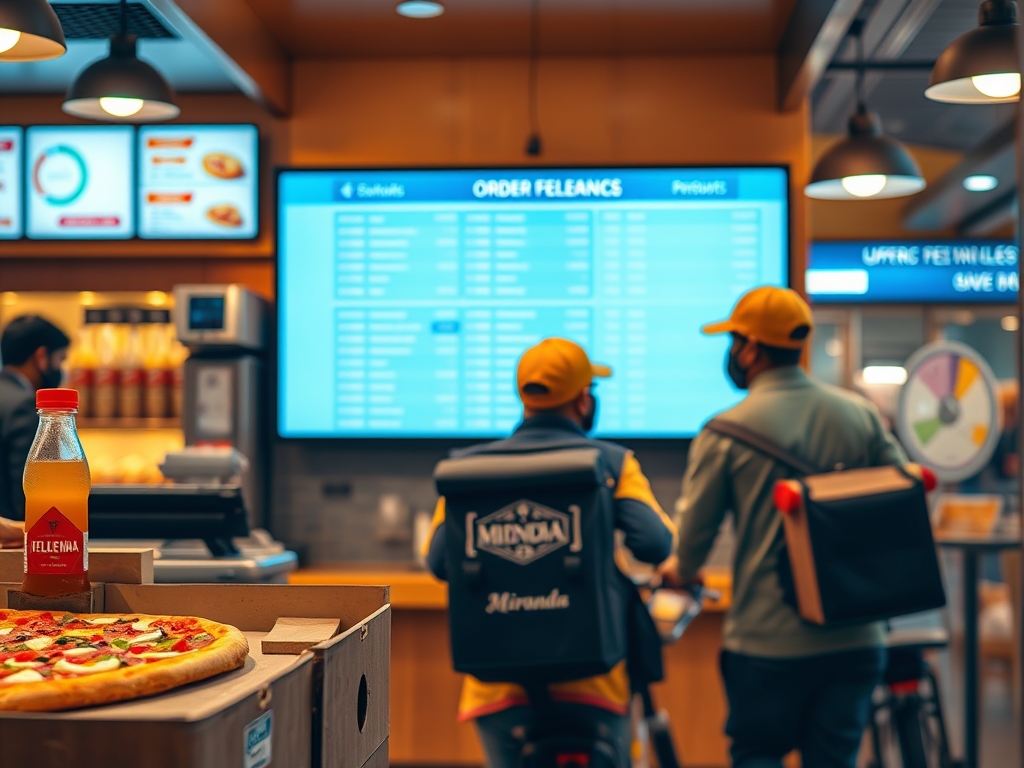
Pizza Hut in India offers flavors that you can’t find in the U.S. 😃 (like Tandoori paneer tikka pizza 🍕). So, whenever I ordered from Pizza Hut using Zomato (a delivery app), my orders were relatively simpler than those from local eateries. However, the items were stuff I can’t find in the U.S.: an Indian-flavour personal pizza and a bottle of Miranda drink. In two-thirds of my orders, the drink never arrived. So last night, when the drink did not arrive again, I reached out to Zomato customer care. They mentioned that the delivery person indicated that the store did not provide the drink. I assume this was the case with other incorrect deliveries as well.
What is interesting is that the chain that fulfilled 2/3rd of orders incorrectly is the only Global chain I ordered from and perhaps the most technologically equipped. As you can imagine, this made me think about how a small update to the process, enabled by AI, can address an issue like this. I am an optimist, and I assume positive intent unless something is evidently and blatantly obvious. So I will assume that this is an error in the process, vs. someone at the BEL road franchise being dishonest. But if every 2 of 3 orders have missing items, the total number of possible errors for this one single store alone could be in the hundreds daily. The good news is that AI-enabled smart cameras can help.
The illustration below shows a simple process tweak, enabled by a smart camera.
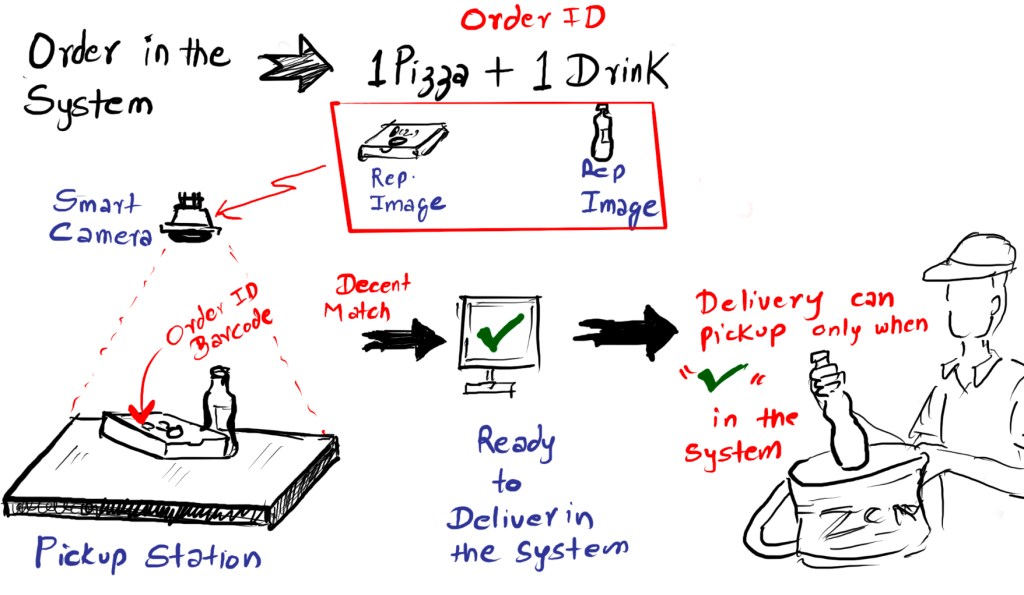
For all deliveries, the final items for pickup are placed in specific spots. Each order is placed within marked areas so that the camera can identify them as separate orders. One of the items need to have a barcode with order ID so that the camera can detect the order ID. Based on the order ID, the camera “detects”, if the items clustered for that order are all the items that are needed to fulfill that order. Only when the camera triggers an “OK to pick”, that the order is picked. Assuming that the incorrect fulfillment was a result of human error, this has the capability to significantly reduce the errors.

 Designed Analytics Blog