
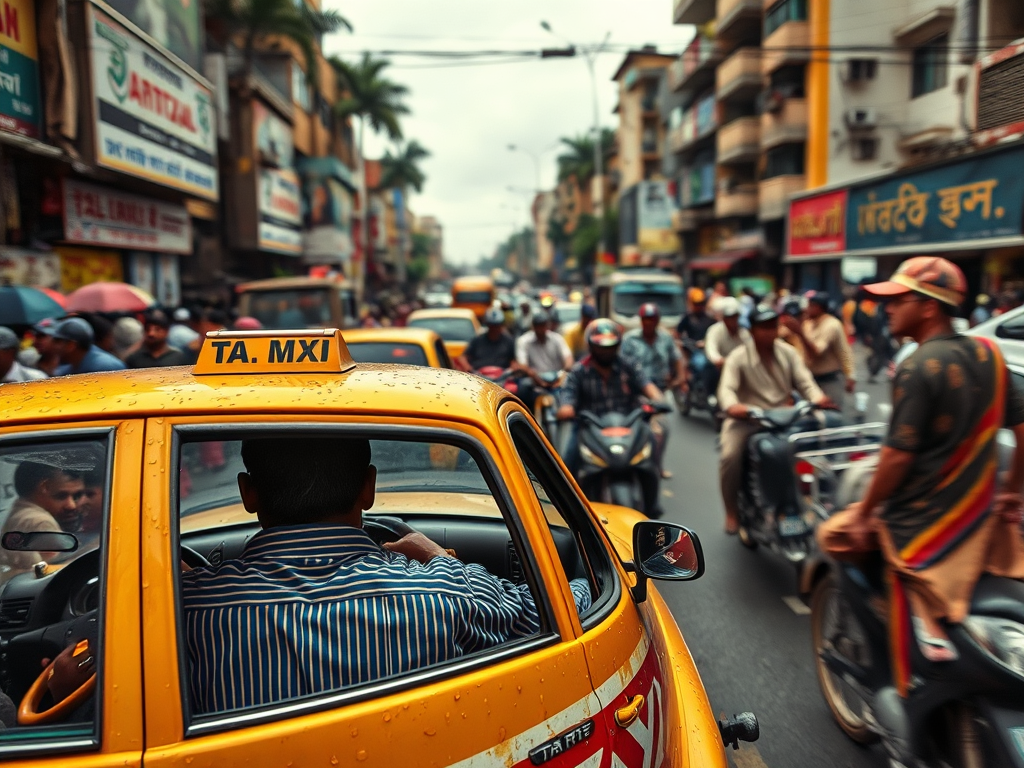
It’s August and hence it is humid in most parts of India. No matter where you go you cannot escape the humidity. It is more severe in places like Kolkata and Mumbai and a bit less of a problem in Bangalore, but it is ubiquitous. So as I got out of the Kolkata airport, by the time I reached the prepaid taxi counter, I was already sweating profusely. I spent almost the first three decades of my life in this type of humidity but looks like last eight years made my body forget this humidity.
As soon as I got into my taxi and started wiping the sweat off my forehead and neck, the taxi driver started driving without giving me enough time to settle down. Being a creature of habit, I reached out for my seat belt but couldn’t find one in the rear seat. Luckily, my hotel was less than 10 minutes from the airport (less than a mile distance-wise but 10 minutes due to traffic), and since there were no highways involved, crazy traffic made sure that the taxi was not going above 30 mph at any point in time.
While it is unfortunate that the traffic is such a mess on these busy market streets in Indian cities, the good part of it is that the vehicles generally can’t drive fast enough to lose control due to speed. Whatever mishaps happen, are minor fender benders though occasionally we do run into news of some rich brat drunk driving their luxury vehicles on these busy streets, causing fatalities. The gist is that the short commute and snarling traffic ensured that I reached my hotel safely.
Things became more concerning when I took a cab from Hyderabad airport to my hotel. Nice highway roads from the airport to the city meant that the taxi was driving very fast and just like my cab in Kolkata, there was no seat belt in the rear seat. But what makes these journeys more scary for those who are not used to it, or have forgotten what it was like, is that though there are defined lanes, no one gives a crap about them.
Everyone is straddling lanes, cutting each other by inches. Basically the traffic is all over the place. The government creates a world-class infrastructure but we don’t use it as intended, yet we often complain that we do not have the facilities. It is true that there are facilities lacking. But in scenarios where we do have the infrastructure, are we equipped mentally and habitually to use it properly?
At one point, my cab driver had to literally stand on his brakes to avoid rear-ending another car that cut into our lane. And I could see hard braking like this happening multiple times in other lanes during my journey. What was hilarious is that the car we avoided rear-ending into had a message in English on the rear window that read: “Life is too short so make the best use of it” 😄. The thought that came across my mind was : “It definitely is short my man if you keep driving this way” 🙃 .
Within a week, I am back into my “India self”. I occasionally take an auto rickshaw on purpose to feel the wind and enjoy no safety measures for passengers whatsoever 😀 But humor aside, considering the infrastructure that I have seen in metros, specifically the highways, one thing that is clear is that rather than expecting that we will follow rules and best practices while leveraging the infrastructure that has been provided, the government should use technology to enforce its best practices and eventually make it a habit. After all, shaping good behavior is also the government’s responsibility. 😀
And this is where AI can help.
Considering some of the technology capabilities I have seen in India’s public sector, implementing a technology solution that enforces good driving behavior is not a difficult task. The solution, leveraging AI-enabled smart cameras, will serve a dual purpose. Not only can it eventually force drivers to drive the way they are supposed to, but it will also help bring in revenue that can be used to further enhance the capabilities. An example has been shown in the illustration. Note that this is just a segment of the capabilities this infrastructure setup can perform and hence is only illustrative, not exhaustive.
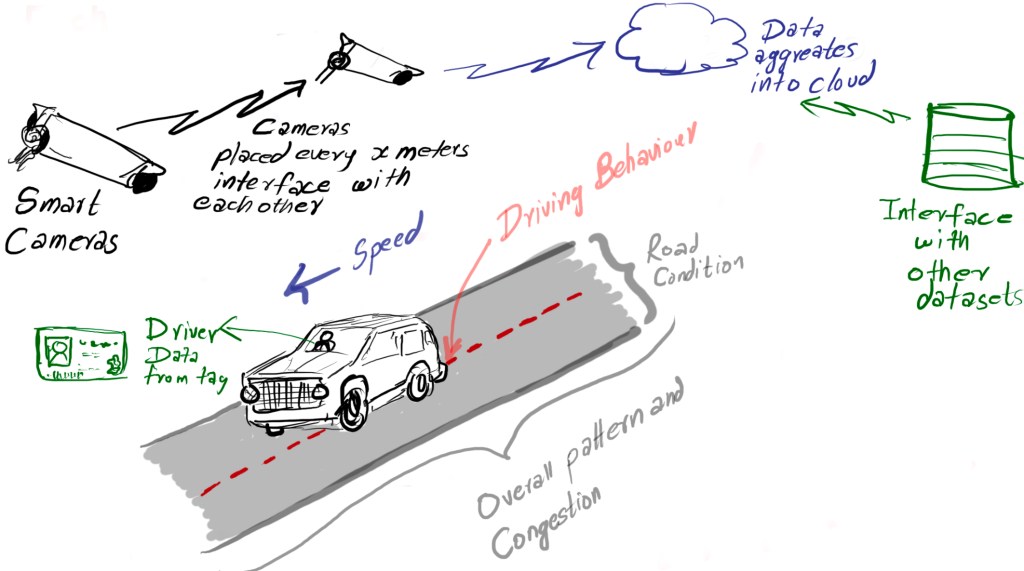
The infrastructure that will be put in place will not work only to detect erratic driving. The data connected can help in many other areas, including urban transportation planning. This infrastructure can also be linked to other key smart governance infrastructure elements in order to bring multiple data points together. This data can also be made available (with consent) for various commercial purposes. The summary is, I can think of a plethora of ways this data point, combined with other governance data points, can help gain insights that can not only help logistics and transportation planning but also bring a whole new strategic perspective into strategic infrastructure planning.

 Designed Analytics Blog