
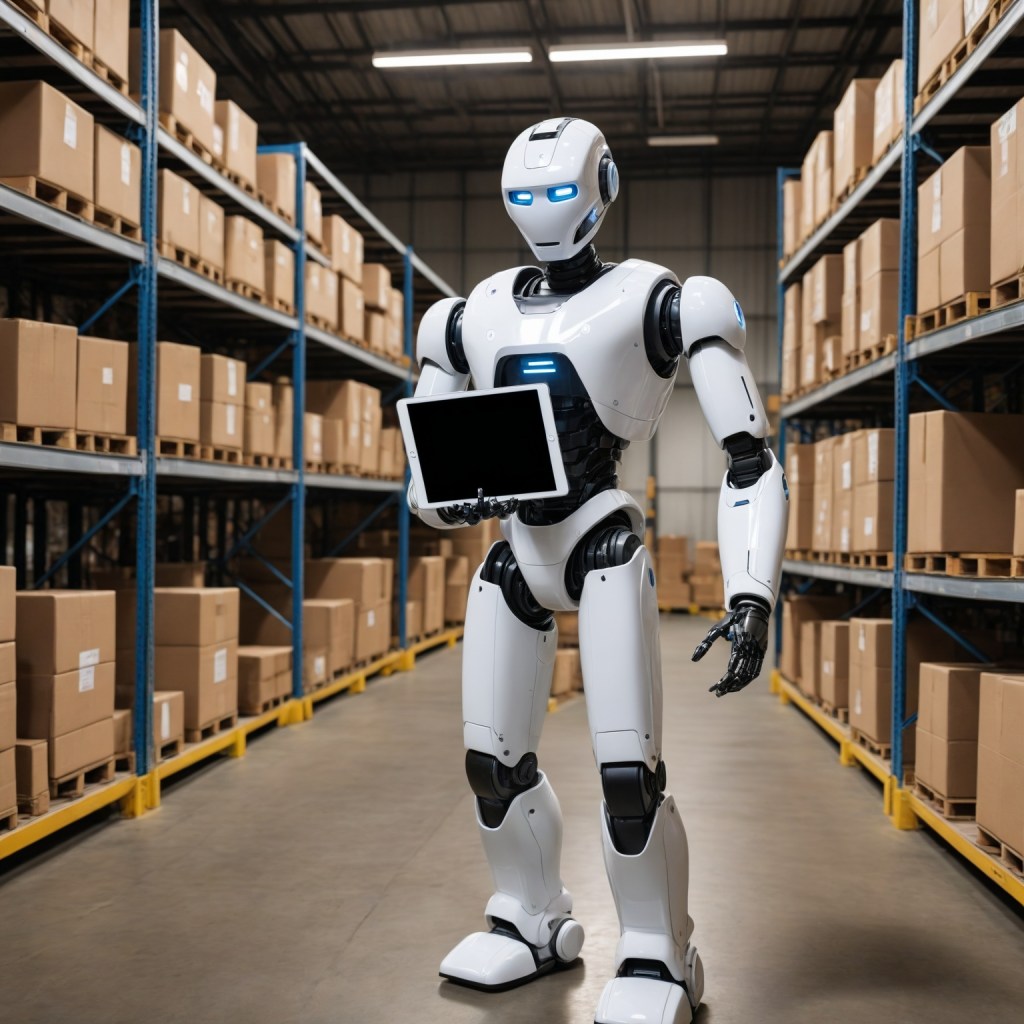
Mobility Solutions on the shop floors in warehouses and manufacturing will grow in prominence in the next few years. I wrote a couple of articles in my previous job highlighting why mobility solutions coupled with edge devices like tablets and smartphones can help realize the true potential of smart warehouses and smart manufacturing. The applications or uses of tablets and smartphones on the shop floors go beyond just the software. In the era of smart factories and smart warehouses, these machines or devices can also act as edge systems on the shop floor.
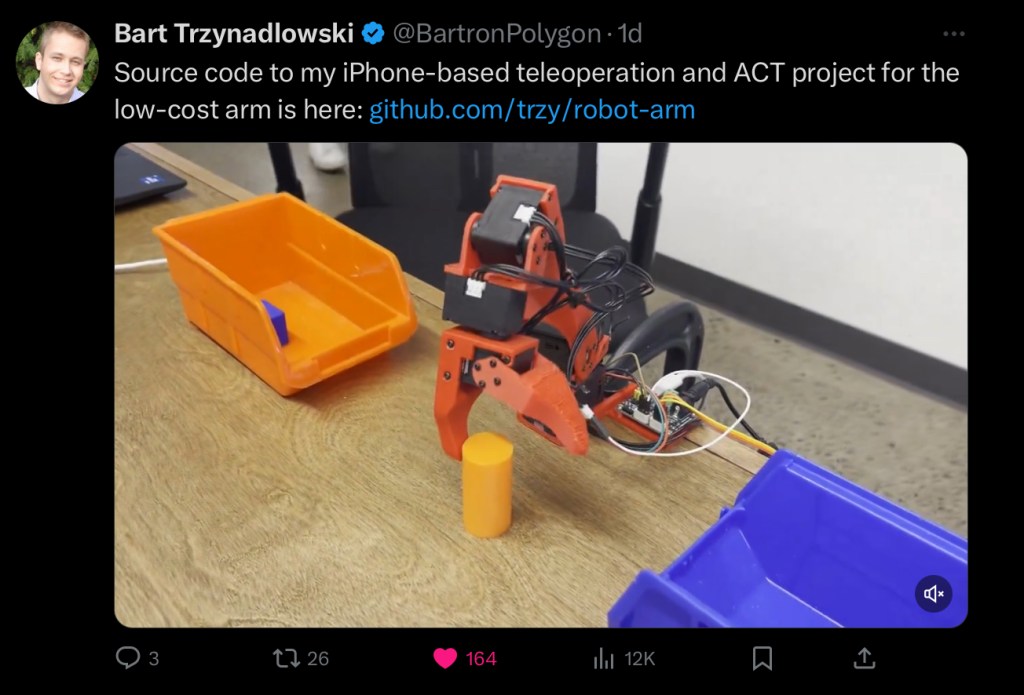
I recently joined Twitter again after a couple of years, and I follow a few accounts that focus on science, engineering, and AI. One of the accounts that I follow is Bart Trzynadlowski. As you can see in this screengrab of one of his recent posts, he dabbles in leveraging the power of smartphones, specifically iPhones (since he used to be an Apple employee and has experience with that ecosystem) in mechatronics and robotics.
Many of his experiments are a delight to follow, specifically in the context of the vision that I propagated a few years ago in some of my articles on mobility solutions. While many of these experiments, like the one shown in this particular screen grab, may seem like a science project at this point, the fact that there is a smartphone involved that can be used as an edge computing device in the future is a powerful proposition. Extrapolating the usage of these edge devices beyond software access, into interacting with hardware on the floor is a powerful extension.
Let us explore this from the perspective of a warehouse. More and more warehouses are deploying mobile bots on their floors. These mobile bots are primarily autonomous and have good accuracy levels. However, like supply chains, warehouses work in a very fluid environment. Deploying the capability to leverage these smart devices in the hands of people on the shop floor can allow for course correction in real time. That is just one example of these edge devices’ impact. With the power and features that leading smartphone brands like Apple and Samsung carry, the opportunities to explore their applications in warehousing and manufacturing are plenty.
The same goes for manufacturing, specifically when we talk about smart manufacturing. From deploying augmented reality-based inspections and maintenance to leveraging an authorized phone to recalibrate the composition of raw materials or change the orientation of a robotic arm, uses galore. These devices take away the constraint of having one single console from which these devices need to be managed. Because the fact is that the most optimal way to manage the shop floor is by being on the shop floor., or to me more precise, being mobile on the shop floor. This is one of the reasons that makes me a nonbeliever in lights-out manufacturing automation in specific industries.
The fact is that as these edge devices start carrying more AI power, their uses on the shop floors in manufacturing and warehousing will keep expanding. There is a huge market for smartphone and tablet manufacturers to grab within the supply chain space. And I’m sure people much brighter than me are already working on enhancing the current product portfolio to meet that demand.

 Designed Analytics Blog