

I was playing cricket with my son in the backyard and got a little bit excited in playing a shot. The result was that the ball that we were playing with got stuck on the roof. But we had a spare one. Unfortunately, within next 10-15 minutes, even the spare one ended up on the roof. In order to keep the game going, I decided to navigate my way to the roof to retrieve the ball. Doing that without a safety harness was a risky proposition, but it had to be done.
After retrieving the ball, I had to take a brief rest break (Yup….I am getting old). As I sat outside for a few minutes before resuming the game, I thought about many different types of vents I saw on the roof. This made me think about how our definition of smart homes is primarily focused on indoors only. The only smart thing we currently use outdoors is cameras. But there is definitely an opportunity to expand the gamut to so many smart things on the exterior structures of a home.
If you look at the roof of a typical suburban home, you will find there are multiple types of vents. Unless you have been to your roof (like I did today), or you run into some issue because of these vents, you may not realize that your roof may have as many as twelve different types of vents. In the video above, at 00:10, you can see the wide variety of vents.
Examples are box vents, wind turbine vents, ridge vents, power vents, cupola vents, soffit vents etc. Then, there are gutters on the edges that help keep the water from rain and melting snow away from your house and roof.
Every type of vent can use a smart sensor-driven device. Suppose that you have a simple box vent, which is essentially a static vent. These are vents without any moving parts and are installed over a hole that has been cut into the roof. These vents use natural convection and allow both moisture and hot air to escape from the house through the attic. Attic in your house generally has parameters different from rest of your house.
An attic not only affects your home’s energy performance but also impacts its indoor air quality. Vents are the gateway between the external parameters and the parameters in your attic. By placing a specific set of sensors in your vents, you can monitor indoor air quality in a much more proactive way, and reconcile it with your parameters at the ground level.
Another example is the gutters. In cold areas like Boston and Chicago, every winter, you will hear about roof damage due to ice dams forming. One of the key reasons for this is clogged gutters, but ice banks may form even if your gutters have been cleaned in the fall. The mechanics of ice dam formation has been shown in the figure below.
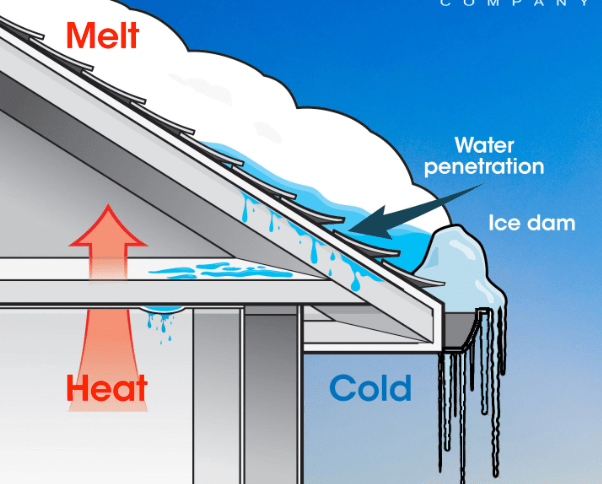
As you can imagine from the figure above, you can place sensors in strategic locations in a gutter system to detect if an ice bank is building. Roof damage due to ice banks can sometimes cost in five digits.
These are just examples. Every structural component on the outside can use smart sensors. The fact is, these types of equipment can be much more attractive than indoor ones. Indoor smartness is more about convenience. Outdoor smartness can help enhance the quality of life. This means that consumers will be willing to pay more. There is a huge opportunity to integrate Generative AI into these products as well.

 Designed Analytics Blog