

This is an excerpt from the Designed Analytics report : Business 4.0 : Building Technology-Driven Enterprises.
In this chapter, we will understand how the dynamics covered in Chapter 5 translate into technical architecture. Please remember that the report does not focus on building architecture or best practices. The primary purpose of the report is to share an approach of how to think about creating an architecture, based on the dynamics of various systems and business nuances.
For this final chapter, we will use an example of a bank. A typical SOA-based architecture of a bank has been shown in Figure. We will leverage one element from this to highlight how organizations can think about redesigning their architecture for a mix of agility and efficiency.
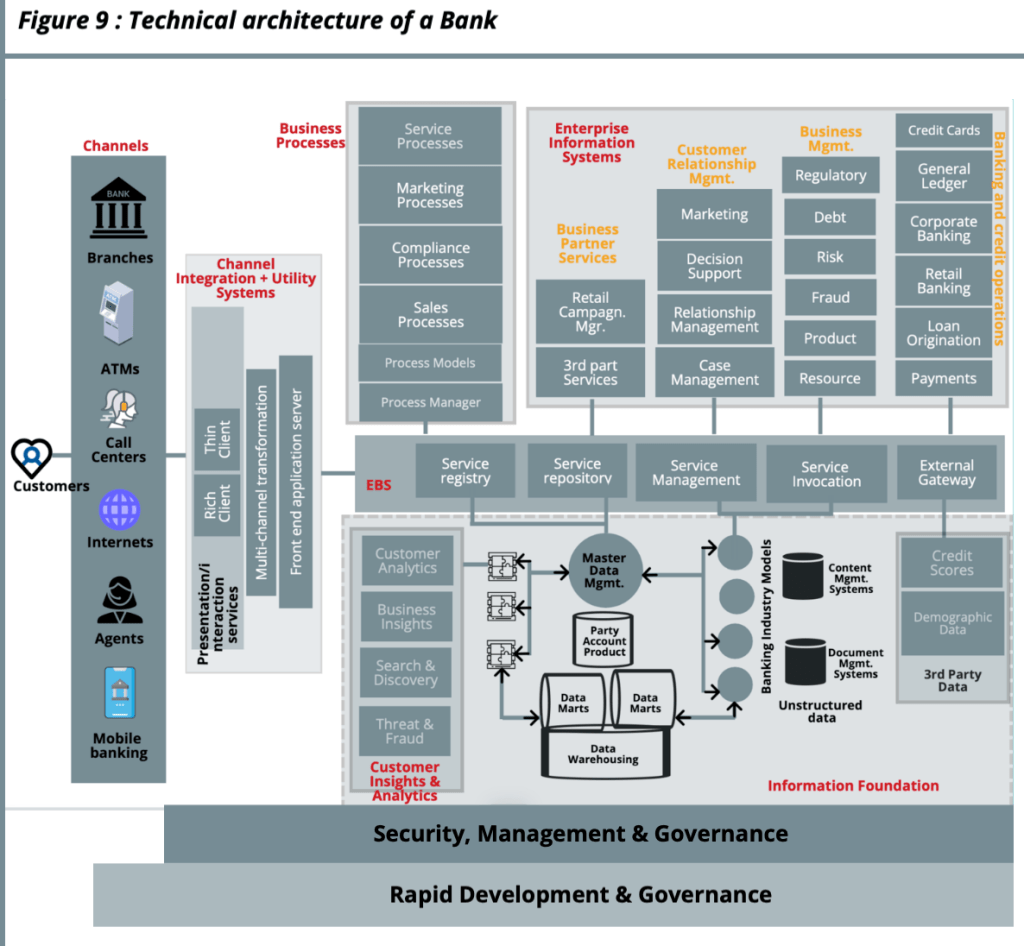
The first challenge with the traditional view of this architecture or architectures across multiple industries, is that they are designed as technical architectures. You can easily see, specifically if you think about the examples we have shared in the previous chapters, that many of these systems need to interact with each other in more dynamic ways, beyond the vanilla enterprise service bus architecture. The siloed technical view of architecture leads to numerous challenges, the primary one being that these systems end up being used.
The good news is that businesses do not need to replace these existing systems. The crux of the platform approach is to integrate these systems, leveraging existing, and emerging technologies, in a way that allows organizations to harness technology beyond operational and informational aspects, into strategic aspects. Let us explore this perspective with an example interaction from the complete architecture shown in Figure 9.

 Designed Analytics Blog