
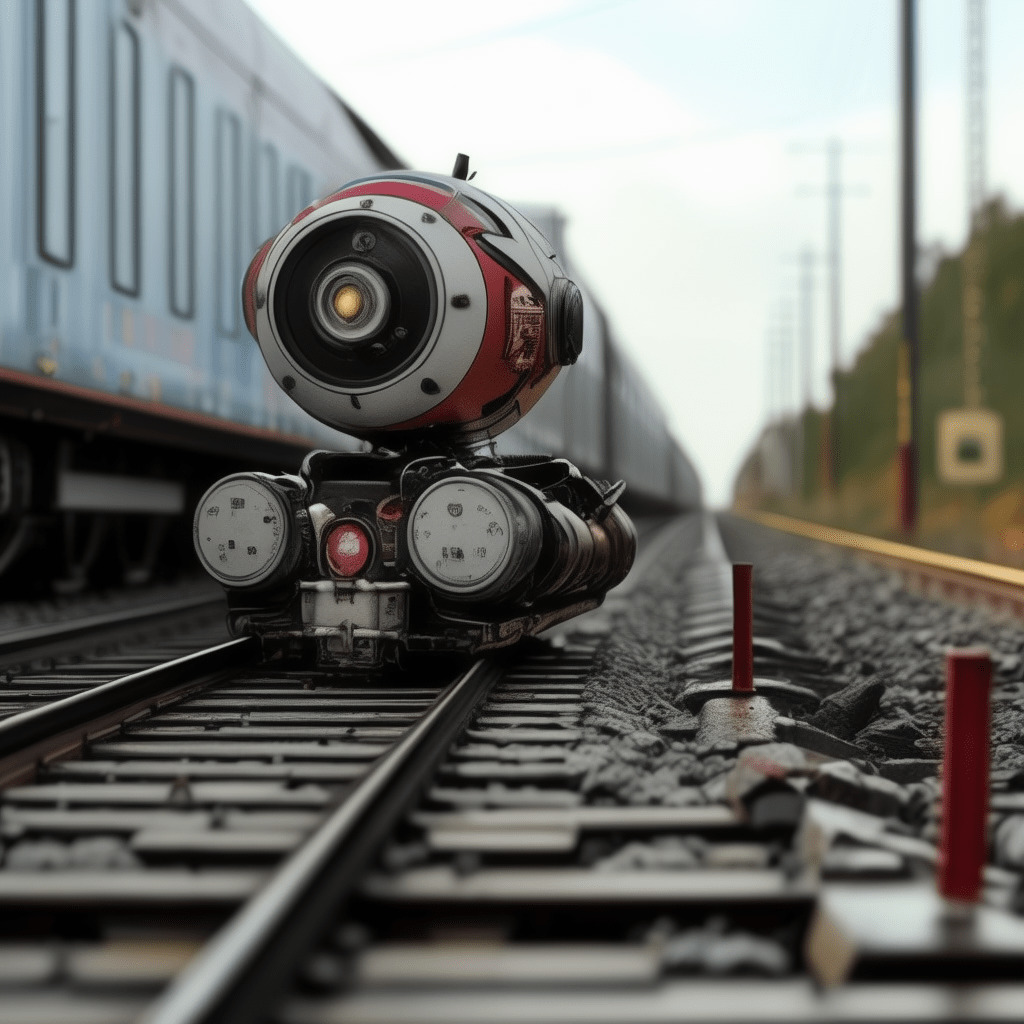
It is election season in India. Being an Indian who still feels attached to his roots, it is difficult not to get sucked into election-related news and frenzy, irrespective of where you are in the world. And like almost everyone who thinks about the long-term prospects of any country, I have my own perspective of who I support from the lens of long-term, realistic development. While catching up with recent developments this morning, I watched a video of a politician I am rooting for. He was traveling in a train , mingling with co-passengers to understand their challenges and issues.
One of the individuals he interacted with was a track repairman for the great Indian railway. He described how manual the inspection process was. While it does generate employment, he explained how manual inspections of bolts and keys on the tracks also leave room for manual error.
Many accidents over the years have been caused by issues with tracks. Sometimes, fringe groups also sabotage tracks in India. Considering that India has the largest rail network in the world, the chances of missing a defect are high, and the cost of an error, even something as minor as a loose bolt, can be the loss of human lives.
The solution, enabled by AI, already exists in today’s portfolio of technology!
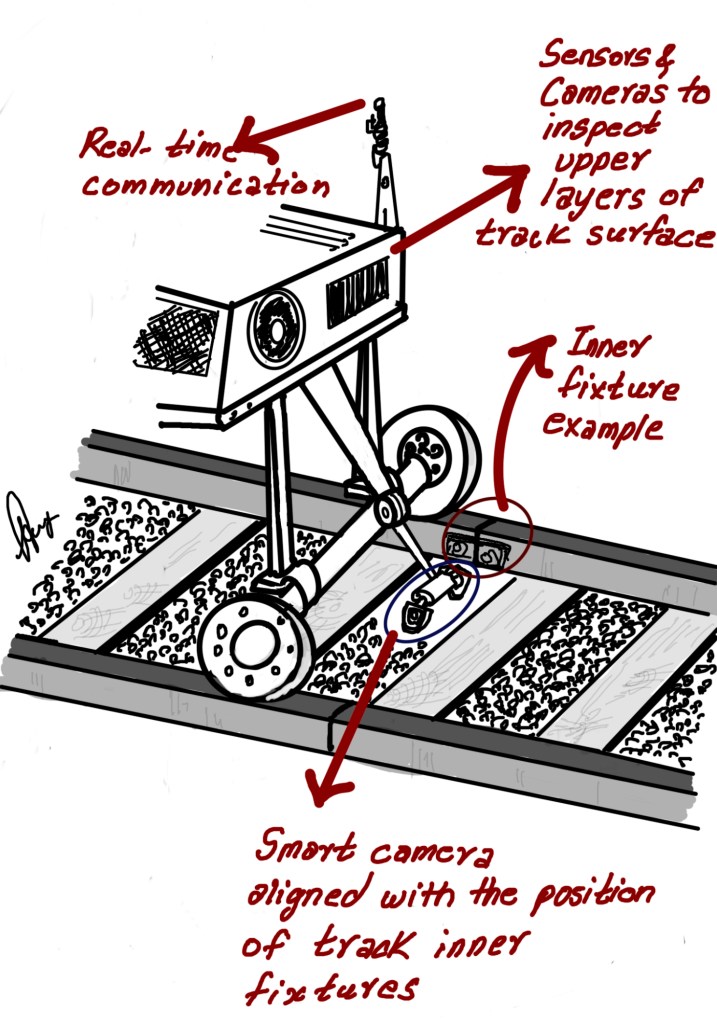
I have drawn a rough sketch of a “Track Maintenance Bot Inspector” below. While this is obviously a rough-cut render, the fact is that every piece of technology needed for a solution like this already exists.
There is a reason I say that physical robotics needs to evolve beyond cosmetic jumps and flips. There are so many opportunities to leverage them.
The concept of this maintenance bot is simple yet effective. Based on train schedules, these bots run between stations and inspect tracks. Scheduling is critical since the speed of these bots needs to be kept below a certain level so that smart cameras can inspect the fixtures, joints, and track surfaces accurately.
However, a remote push button functionality can easily be built to get these bots off the track remotely, bringing some flexibility into run schedules. Theft prevention will need to be built as well because these bots need to run autonomously. You start with the busiest tracks and then scale to the wider network.
Training algorithms for the entire gamut of anomalies on the tracks is not challenging, neither is the hardware needed futuristic. I believe it is just a matter of priority. And human lives should always be the top-most priority.

 Designed Analytics Blog