
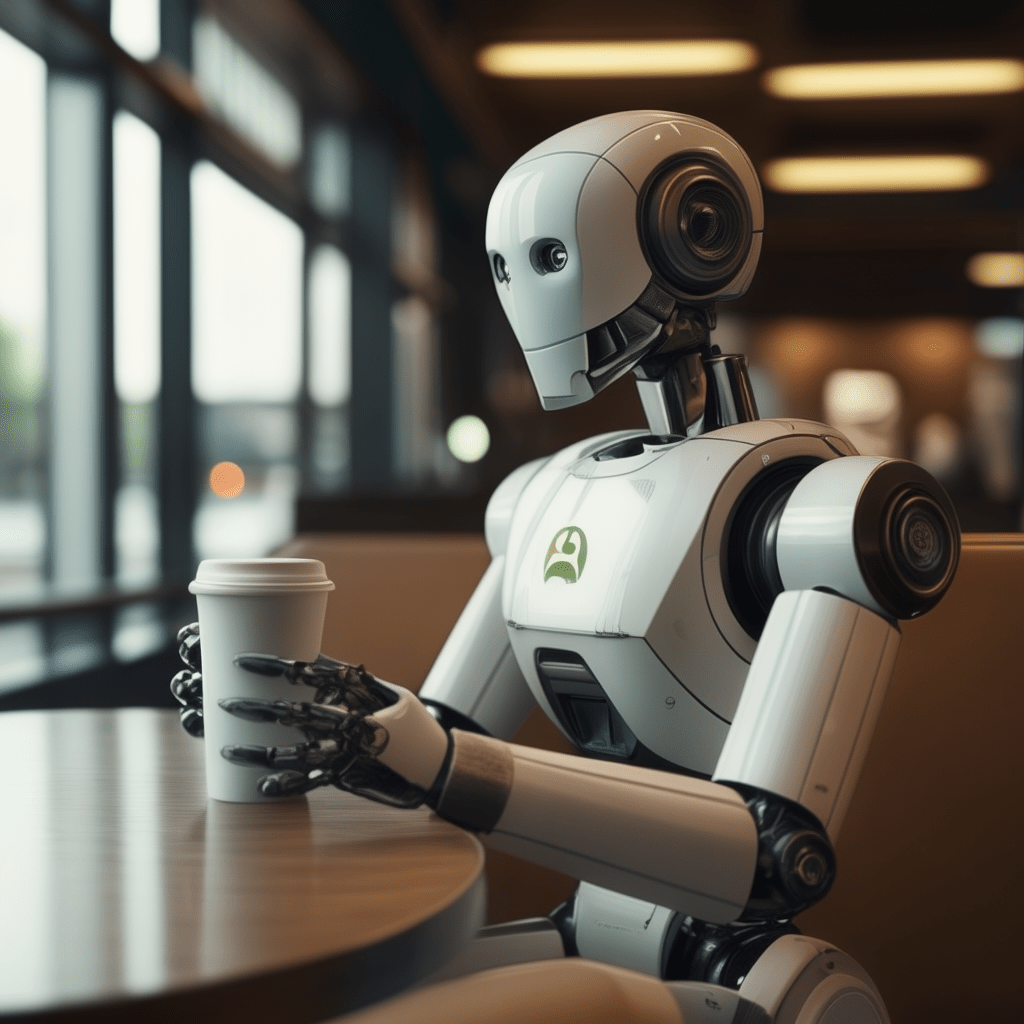
The thought came across my mind while reading the print edition of WSJ this morning. Specifically, while reading an article titled, “Starbucks Is Running Out of Customers on its Home Turf“. As I was reading this article, I started thinking about another article I had read a few days ago, where the crux was that Tesla now sees itself as a technology company.
However, the article also highlighted that the next focus area for Tesla is RoboTaxis. To me, this seemed confusing. When I read about Starbucks offering Pork latte in China because it is running into growth challenges in North America, I thought about how Starbucks is stuck in the same trap that Tesla is stuck in. The reason behind the “Pork Latte” offering is that Starbucks is stuck with the thought that it is a coffee company. So if it can’t grow selling coffee in NA, it needs to be innovative in selling coffee in other markets. Companies sometimes become stuck with their success. This means that they may struggle to realize what their underlying strength is.
Consider Tesla. On the one hand, it has rightly identified that it is a technology company, but its “Automobile mode” is still leaning towards products like RoboTaxis. Just like Starbucks, “Coffee mode” is leading to experimenting in China with products like Pork lattes. Tesla is indeed a technology company. And that is why it should not obsess with RoboTaxis.
The portfolio of companies that Musk owns or leads and the innovation within that portfolio clearly highlight Tesla’s strength as a technology company. The challenge is that Musk is always too futuristic with his vision of what is next. If you read my articles, you know that I love being futuristic, too, but I have a strong belief in interweaving the long-term with the short-term and mid-term.
I have never been too enthusiastic about EVs. Despite my wife pestering me for years to buy a Tesla, I did not (Though now may be a good time due to the price 🙂 ). While the entire world was exuberant, I saw some missing underlying fundaments for long-term success. In the initial boom phase, it may have been difficult for Musk to imagine that, at some point, the interest in EVs would start declining. That is not a big deal if you have a portfolio of tangible products. The problem with Tesla is that it has no other “near or mid-term” product.
The solution is not to focus on futuristic products like RoboTaxis. It can be on the long-term portion of the roadmap. Tesla, across its portfolio, has some strong pioneering technologies. From AI solutions in Teslas to AI algorithms that allow Space X rockets to land precisely, there are plenty of technologies to build a pipeline of mid-term products that can be used. Routing them to humanoid bots and robotaxis only can be dangerous.
The same goes for Starbucks. It needs to see its infrastructure, supported by technology and unique employee culture, as the key capability that it can leverage to offer coffee. With this view, it can leverage that underlying capability to create new growth opportunities. It should break the invisible constraint of being a coffee company. We will cover these opportunities in a separate article.

 Designed Analytics Blog