

This is an excerpt from the Designed Analytics White Paper: An Honest Guide to Developing AI Roadmaps. The link to download the White Paper can be found at the end of the article.
Once you have your initial “Why”, you can start filling in the details. “Why” is the purpose of the roadmap. In our road trip example, we had the stops, 1,2 and 3, that fulfilled the purpose of the “Why”, which was to serve a set of customers. In our case, once we know the “Why”, we know that this “Why” will be achieved by successfully serving stops 1, 2 and 3. And these three stops, in our case, are short-term, mid-term and long-term milestones.
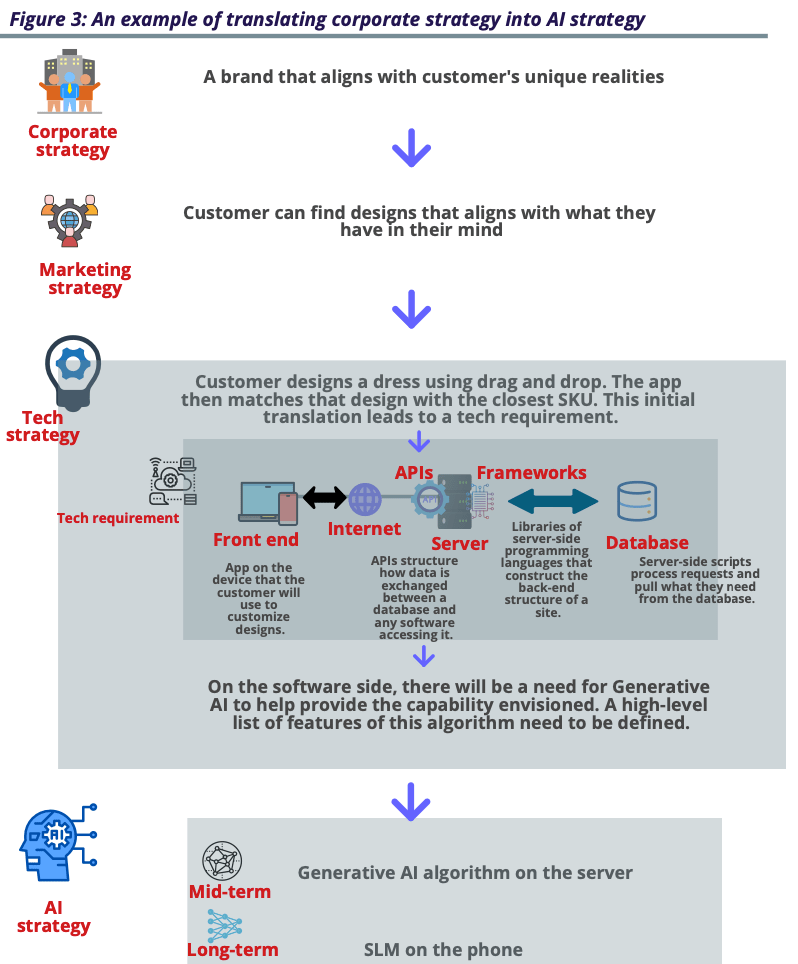
If we go back to our trucking example, we know that the purpose of the trip is to fulfill demand at three locations. But the overall objective is that you want to deliver the products that are currently loaded on your truck (“What”). The three stops are the second layer of “Why”. The same approach holds for the “Why” component of AI roadmap formulation as well. The load on the truck is akin to the resources you need to load to meet your milestones, in terms of people, processes and technology. Let us understand it with the help of an example. The example has been illustrated in Figure 3.
Download the White Paper using the “Download” button below.

 Designed Analytics Blog