

I had to make a quick trip to FedEx today to ship a couple of returns. For these drops, there are kiosks. You can scan the barcodes and print the receipt or get the receipt emailed. What I was returning was a soundbar and a subwoofer. These were in two separate packages. The scanning equipment, as shown in the image I took at the kiosk, was fixed to the counter and had limited space under it. So, while I could scan the package with the soundbar, the package with the subwoofer would not fit. It did fit, but there was not enough wiggle room for me to move the package so that the barcode could be read. So, I had to get in line for that package to seek help from an associate.
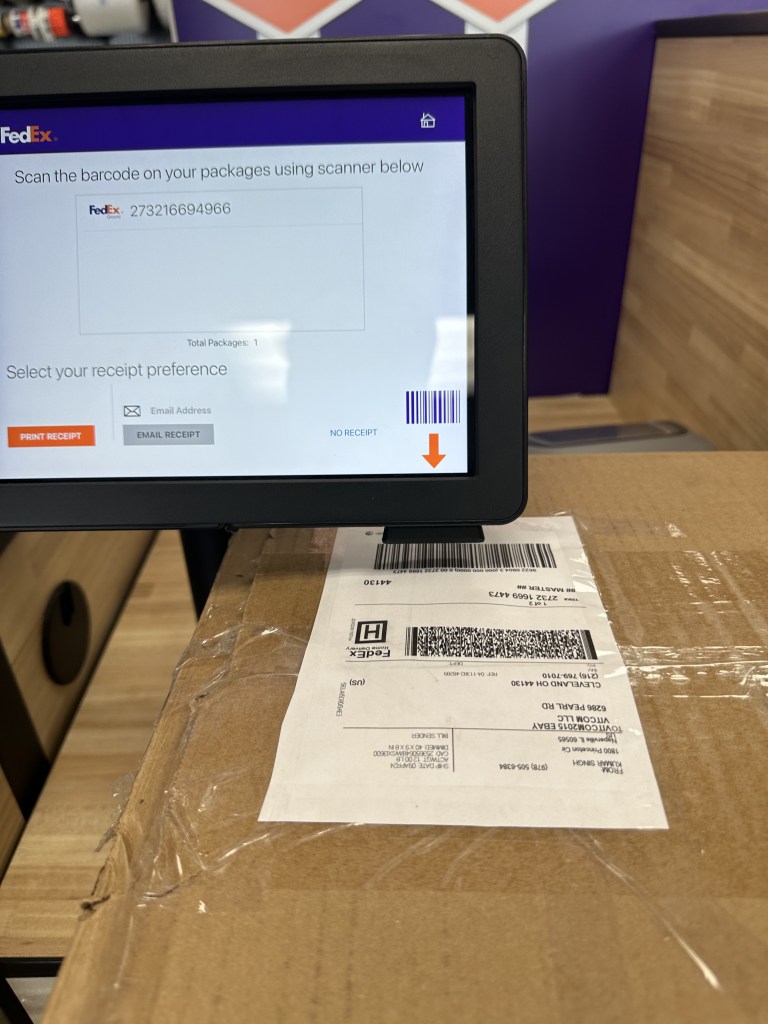
This is an example of why design is more important than technology. From the core technology perspective, barcode scanning is a commodity technology. In this specific, real-world example, FedEx’s intent was obviously to facilitate customer experience. The kiosk not only helps avoid waiting time but is often faster for many customers. And it probably works for 90% of packages. You need not reinvent the technology to address the remaining 10%. By making a design alteration to these kiosks, you can take care of 100%.
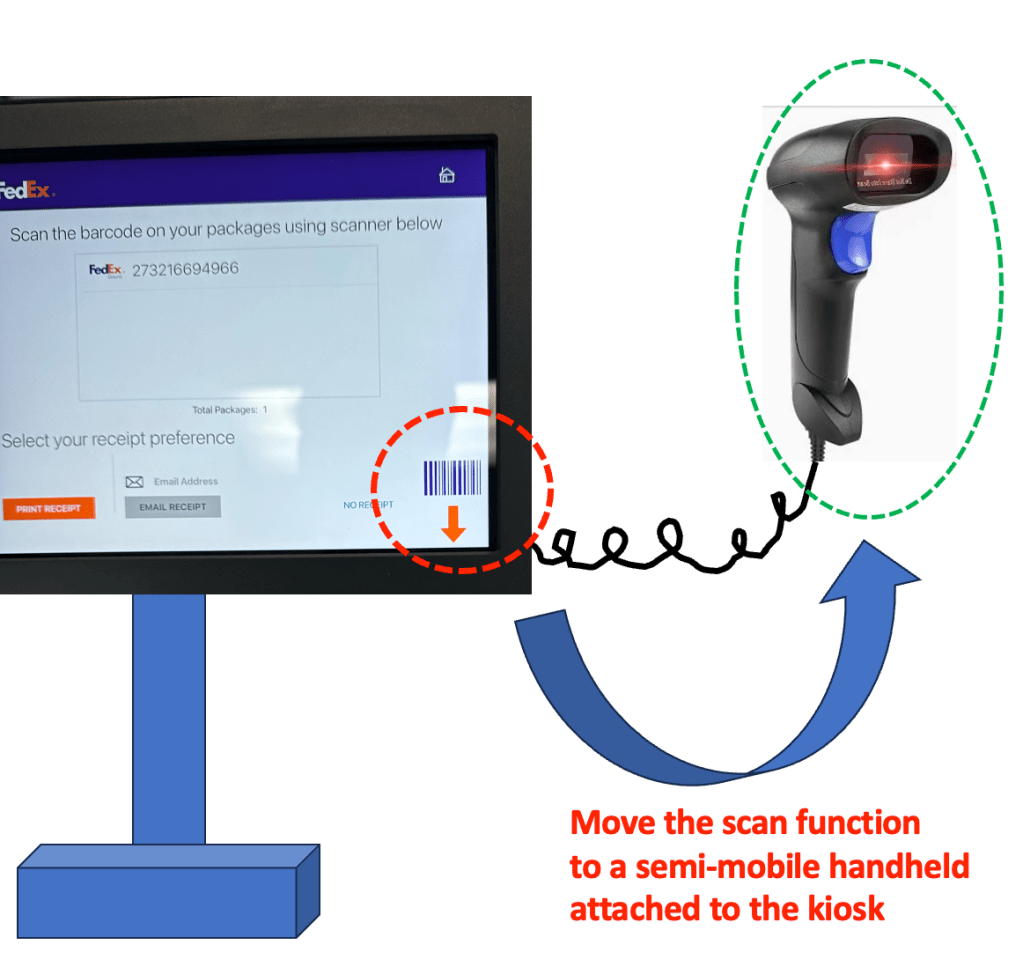
Maybe this type already exists and was expensive. As I was driving back, I thought about this and how it relates to a point I keep emphasizing, which is reflected in the name of my blog site. Even analytics needs to be designed in a specific way for the initiative to be successful. Your analytics initiative is often powered by the underlying process rather than the analytics methodology itself. The same goes for cloud technology or modern-day enterprise systems. And also for Generative AI. On the one hand, you have features, and on the other hand, the challenge of how those features and offerings will come together to solve issues that businesses grapple with.
Generative AI is currently being leveraged extensively to automate processes for productivity. But what if we could use it for collaboration, specifically in areas where collaboration is needed to generate consensus on numbers or facts? One such area is Sales & Operations planning.
I was preparing a manufacturing capacity planning use case for my “Friday Fun” episode yesterday. As you may have interpreted from the episode, the crux or the analytics behind the manufacturing capacity planning is pretty simple. If you have not watched the episode, you can watch the episode here:
It is not rocket science that the core aspect of S&OP is not analytics but the process. The numbers are not complicated; getting consensus is a complex aspect of the process. The majority of the S&OP solutions today focus on numbers. In my opinion, should we even call some of these solutions S&OP? This is where the design aspect we discussed comes into play. And so does Generative AI.
Most leading enterprise systems have already started introducing generative AI capabilities into their solutions. Other features like analytics and data integration also exist. By integrating existing components and features, we can implement a significant percentage of the “consensus building” aspect of processes like S&OP with Generative AI. This is not just S&OP but also other areas where collaboration is critical, such as collaborative planning, forecasting, and replenishment (CPFR). Generative AI can never replace the whole aspect of the human-to-human interaction needed to close the process. Still, it can ensure that some form of consensus is already built into the process early on.
Let us revisit the Laughing Green example we discussed in the “Friday Fun” episode and use that as an example. Note that this is just one example of the end-to-end S&OP process. There are at least two dozen ways to leverage Generative AI similarly to enable a true S&OP process in an enterprise system that goes beyond numbers. Most enterprise systems start capturing the sales forecasts even when they are in the pipeline stage. Let us assume that there is a sales manager, Robert, and a manufacturing manager, Rob. One of Robert’s big accounts is a store chain, Gaslighting Inc. Gaslighting Inc., true to its name, provides dubious forecasts and spurious demand data to Robert. Considering the account size, Robert does not like saying no to Gaslighting Inc.
However, the co-pilot immediately warns when Robert enters these forecasted numbers in the system. Using analytics paired with Generative AI, the system communicates to Robert that Gaslighting Inc.’s forecasted numbers are xy% more than actual mean sales over the last five cycles and yz% more than the highest volume sold through their chain. Robert obviously would still go ahead and enter these numbers. He is a sales guy, after all.
But these notes get included in that forecast. As Robert enters these numbers, Rob, the manufacturing manager who is the manufacturing stakeholder, gets notified with the exact same notes. If you are familiar with S&OP, you know that the “consensus building” process typically starts with discussions like this, with manufacturing calling out the inflated forecasts. Here, the system itself triggers this even before the very first S&OP meeting.
I can keep highlighting how Gen AI, coupled with the existing capabilities of these systems, can take care of more than 50% of collaborative aspects of S&OP, ensuring that even before the team meets for the first time in person, a significant amount of collaborative elements have already been executed. No additional technologies are needed. I’m just introducing some design aspects. That, my friend, is the power of design!

 Designed Analytics Blog