
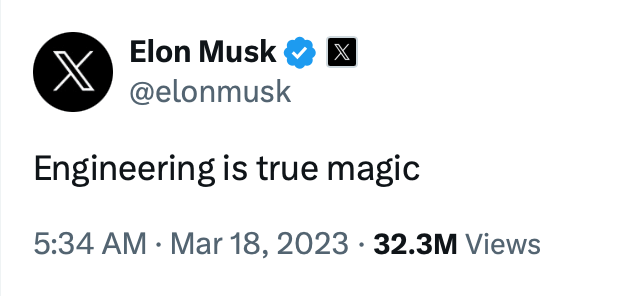
Elon Musk, over the years, has insisted that engineering is magic, or a capability closest to magic available to mankind.

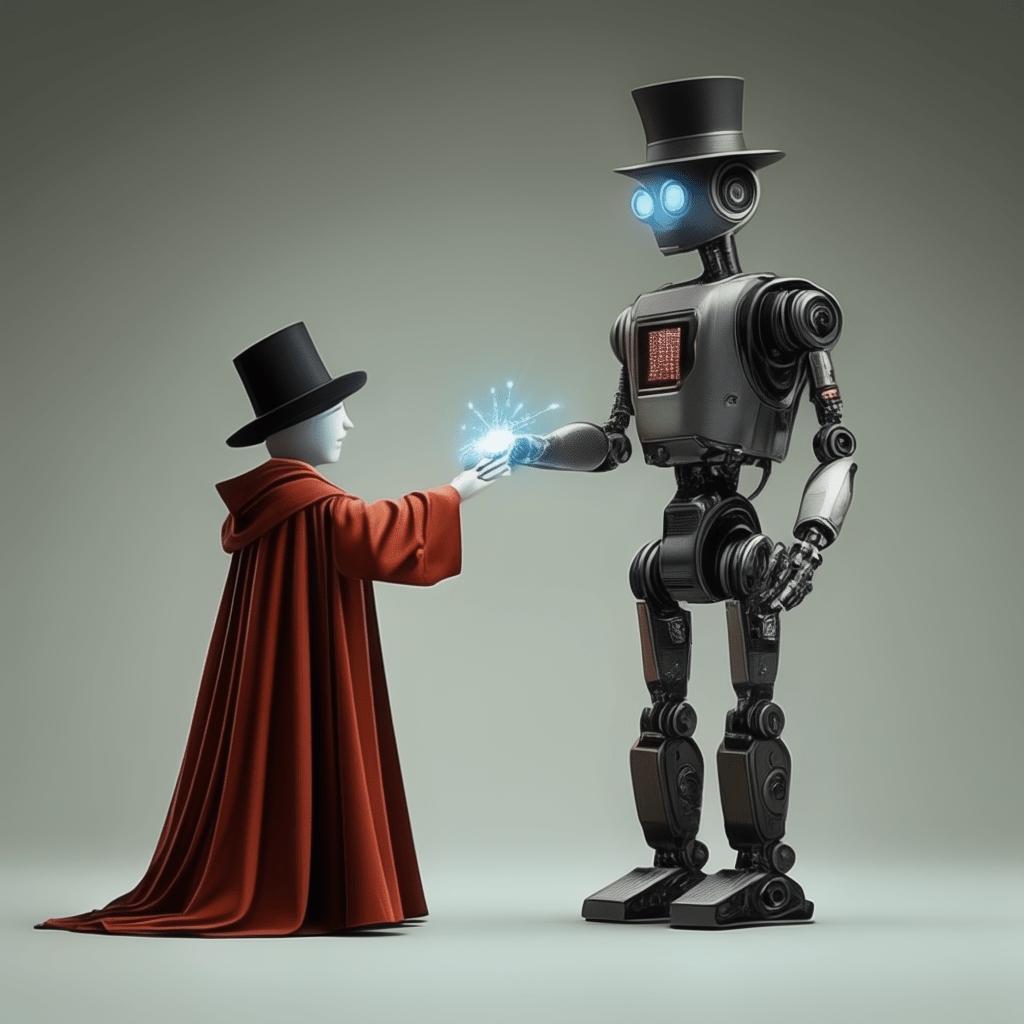
If we think about the trade of magic itself, what is the core aspect that creates “magic” in the trade of magic? Is it the magician’s hat? Their wand? Their robe? Of course, none of these. What makes magic happen are the tricks that the magician plans. Every physical object and cosmetic appearance involved exists merely to support that magic trick.
When Elon, or anyone else who has ever used technology to create something “magical” talks about engineering being magic, they mean how engineering principles can be leveraged to envision capabilities that may seem magical. And just like the tricks that a magician envisions, the real magic of engineering, whether it is computer engineering or mechanical engineering, lies in the “tricks”. And this has become more important than ever in today’s world of AI boom.
I was reading an article online indicating that a significant percentage of students at unarguably one of the best engineering institutions in the world, IIT Delhi, failed to get jobs this year. This has happened at India’s premium management school as well. The fact is, this is not just an India thing.
Similar trends can be seen in developed countries as well. This is a stark reminder that what creates magic in engineering is not the degree nor the hard sciences taught within these disciplines. They are just akin to hats and wands. The challenge is that in the age of AI, tricks that use props like hats and wands have become more critical. AI can take care of hats and wands.
If you are wondering what this means, here is a real-world example. I was reading this WSJ article a couple of weeks ago, A Brazen Yogurt Heist Shows How Cyber Gangs Are Hijacking U.S. Goods, which covered how some digital freight tendering platforms are used by scammers. I had written numerous times, even before digital logistics startups started struggling, that merely digitalizing a capability in the 20s is vanilla and will not create long-term business sustainability. This is an example of why I say so. A slight modification of the platform design can ensure that executing a scam like this will be impossible. The magic is in such “tricks”. Wands and hats are commodities now. Such digital platforms are now plenty and more and more will keep mushrooming.
Take another example, another article from WSJ. This article, Norfolk Southern Agrees to $600 Million Ohio Train Derailment Settlement, Norfolk Southern Agrees to $600 Million Ohio Train Derailment Settlement, was about train derailments in the U.S. Research such incidents, to understand how they happened, and one aspect that will clearly emerge is that they can be prevented.
The world of jargon has already moved from Industry 4.0 to Industry 5.0 but has failed to leverage the underlying capabilities of Industry 4.0 to ensure that such accidents do not happen in the future. Every day, I come across several new articles that make me wonder why we have not fixed these issues yet since the technology needed to address these issues is mature enough.
The secret recipe for creating magic with technology is the tricks. We are fortunate enough to be in an era where technology capabilities exist to support the majority of “tricks” you can envision. Whether in education or industry, we need to focus on developing the capability to envision these “tricks.” Remember, sans the tricks, with only costumes, there is only a very fine line differentiating a clown from a magician.

 Designed Analytics Blog