

I came across a promoted post in my LinkedIn feed this morning highlighting the impact of distracted driving. Someone who prioritizes safe driving too much (no speeding ticket in over a decade), this caught my attention.
Distracted driving becomes a more significant issue when it comes to truckers. A truck traveling at 65mph can very quickly turn into one of the most deadly missiles on the road due to a distracted driver. While distracted driving has negative consequences, irrespective of the vehicle you are driving, there is no doubt that the resulting damage can be far worse when it comes to trucks.
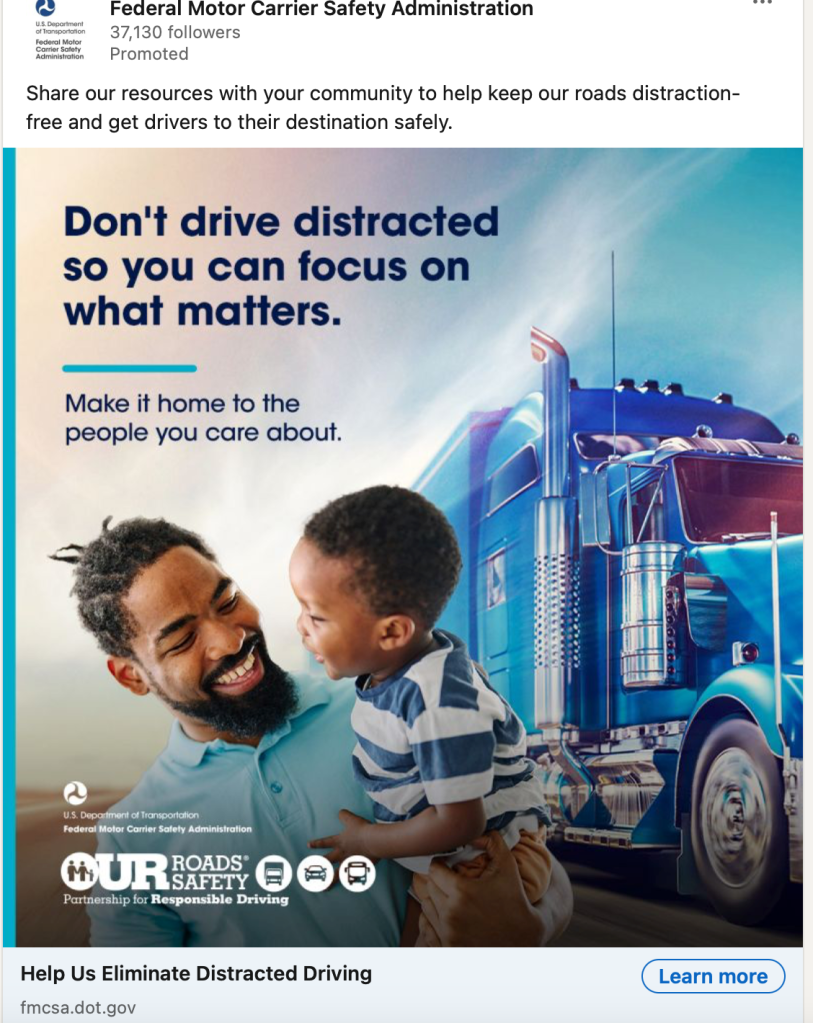
As you can assume, I started looking into this from the perspective of how technology can help address it. What I found was that technology is the cause of most of these distractions 😄.
The starting point obviously was to understand what the top distractions are. A quick web search revealed the following top distractions (which, for some reason, also includes “distraction” 😄). In addition, you can see that more than half of them are technology-related. But while technology distracts, it can also be leveraged to minimize technology-related distractions.

This post is not about the drawbacks of leveraging technology while driving. I will obviously cover how technology can help, but all those suggestions will be obvious. What will be the core of this suggestion, will be the process. This post is about the aspect of leveraging the combination of processes and technology to “shape” people’s behavior.
In this specific example, we can definitely use technology to minimize technology-related distractions, but the drivers must use it effectively. And the fact is, that is where we fail. While this initiative to educate drivers about the risks of distracted driving is a good use of the budget allocated, it is a futile exercise. Grab any CDL-holding truck driver, and they are very well aware of the risks of distracted driving. Just like smokers understand the dangers of smoking.
This “education” reminds me of a written driving test I took when I got my license for the first time in the U.S. I remember questions like “If you miss an exit, what will you do?”, with multiple-choice options, one of which included, “I will stop on the highway, then back all the way to the exit, so that I can take the exit.” Almost every other question was like this example. Meaning that even the most horrible drivers would get them right. Many of them may not follow those rules every time. The test grants the license but does nothing to “embed” the behavior in the drivers.
Though more stringent, professional driving licenses like CDL follow the same approach of checking boxes to grant the license. Once the license is issued, there is nothing to keep the behavior compliance in effect. While the regulations on driving hours are enforced, enforcing driving behavior is a challenge. Technology can help.
One opportunity area is the licensing process itself. Modifying the process, and augmenting it with technology can help build “muscle memory” behavior to avoid distractions. But to reduce distraction and related accidents, let us focus on the aspect here post-licensing. The focus must be on how this behavior can be enforced.
Driving hours are strictly monitored because otherwise, many drivers may want to take the risk of driving back-to-back loads without stops to maximize earnings. But that means tired, drowsy, and hence distracted drivers, increasing the risks on the road. The same approach must be leveraged if there is a will to curb the risk of other distraction risks mentioned above.
This behavior can be monitored with just one smart camera kit on each truck. The illustrations below show how this type of solution can work.
Step 1

A smart camera kit inside the truck, enabled by edge AI, monitors and classifies driver behavior, based on the type of distraction.
Step 2
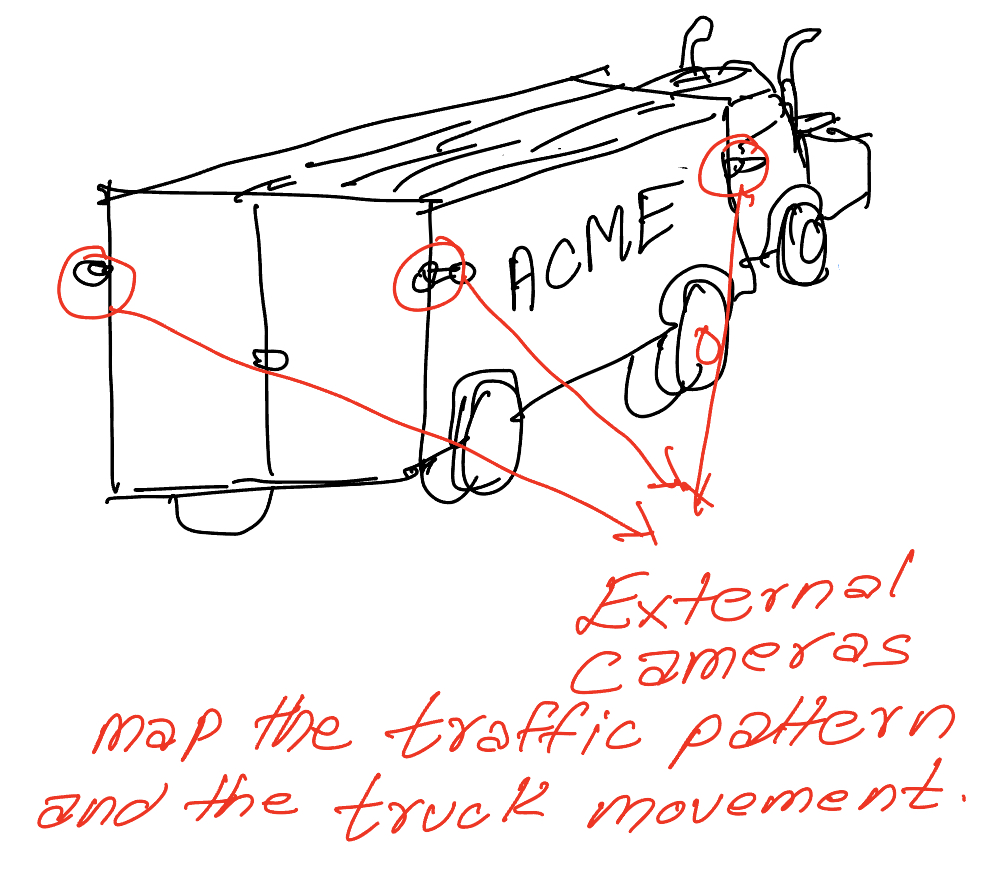
Smart cameras and sensors fitting on the outside of the truck capture data simultaneously.
Step 3
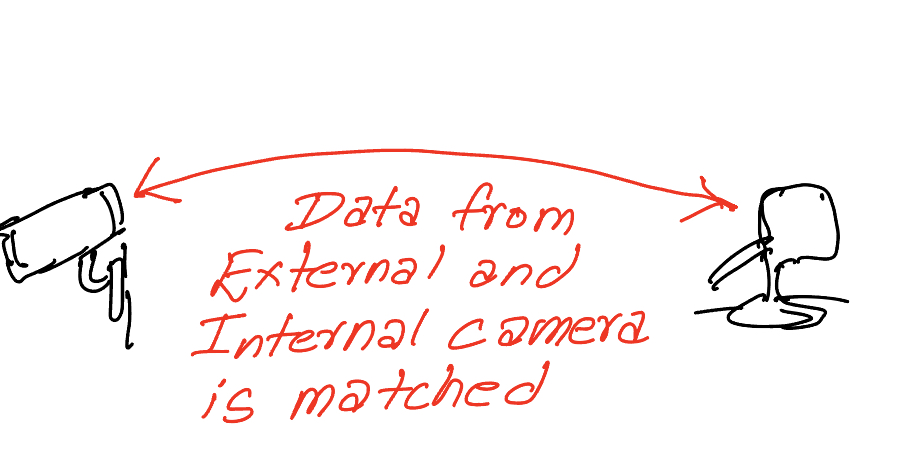
Then comes the fun part: performing the analytics, which will be automated and leverage data from the internal and external kit.
Step 4
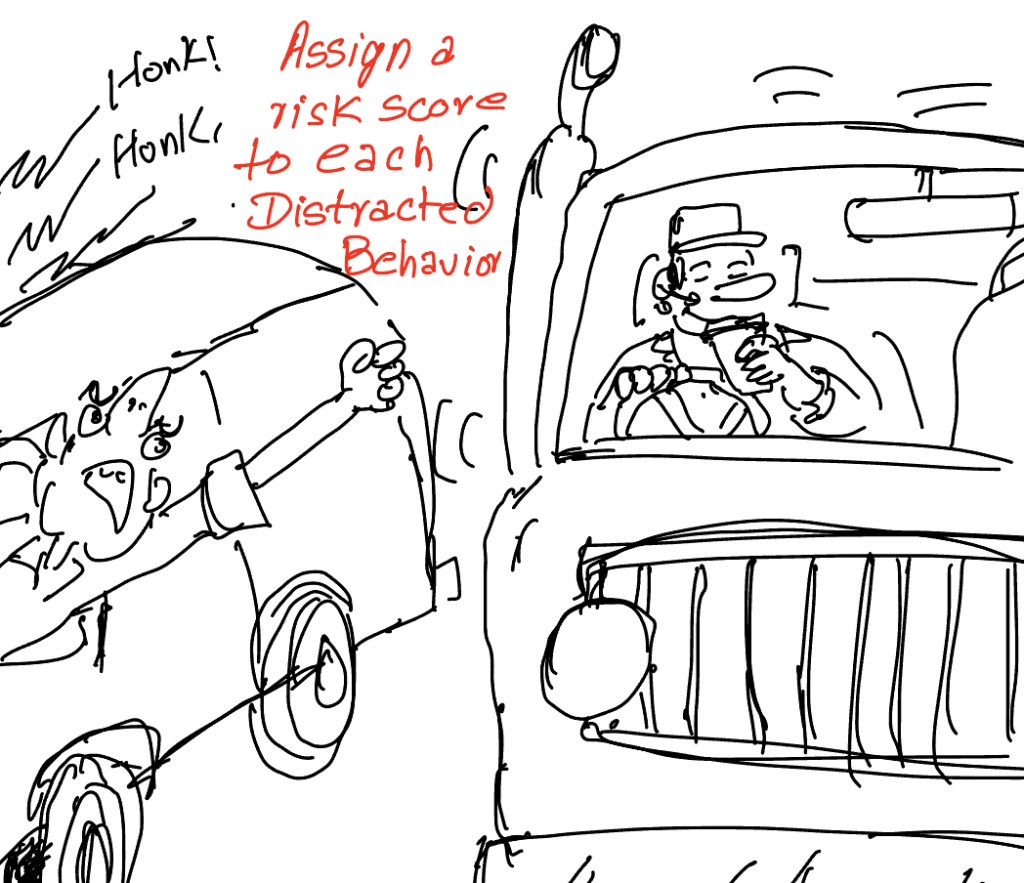
Based on the behavior data from the internal camera, and the external camera data, a risk score for every distractive behavior can be calculated. An example is the driver reaching out to grab something when in heavy traffic. Also, the truck swayed a bit into the other lane. Time stamped data from external and internal camera can reconcile these two events, hence providing data, to both illustrate, as well as quantify, the risk of distraction.
Through a regulation, FMCSA can make it mandatory for companies to install these kits on their fleet. There could be a subsidy from the government to buy and install these kits. After every trip, the sanitized final risk report data will need to be shared directly with FMCSA.
Drivers and companies will have the option to review the data and add any comments, explanations, or objections before transmitting it. The federal government can provide individual operators with these kits and installation for free, but it must make them mandatory for every trip.
Once drivers understand that they are being observed for distractions and will be reported, their behavior will start changing. It may take years, but the results will be positive. AI can help save the lives of truckers and make roads safer.

 Designed Analytics Blog