
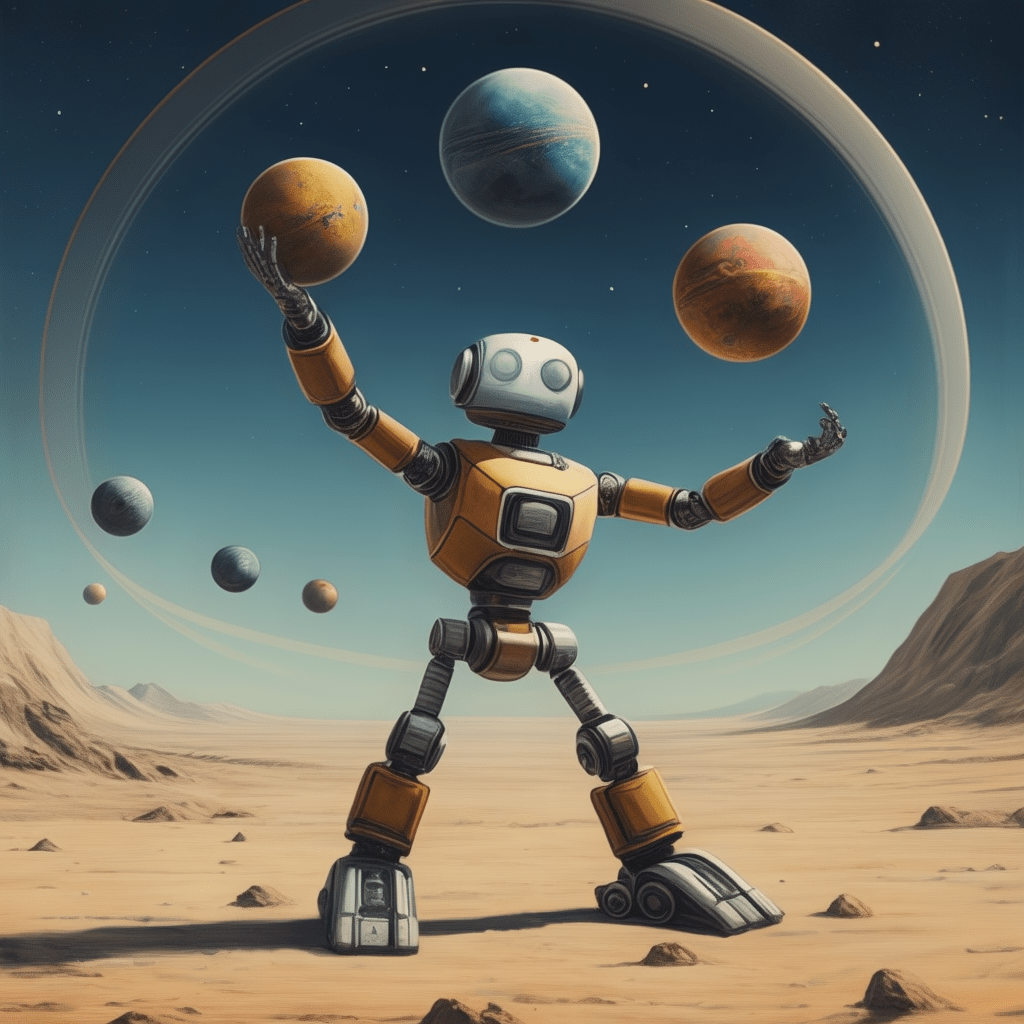
Most nerdy folks with a Netflix subscription have probably binge-watched the series” Three-Body Problem.” Before I started watching the series, I did not know much about the concept of three-body problems. After a couple of episodes, I realized that the series was named after a problem in physics. Then, of course, I researched it. If you want more insights on the three-body problem, this paper from Scientific American is an excellent read: The Three-Body Problem.
The series is an amazing treat for those who love science and physics and are also fascinated by science fiction. Very few science fiction series explore a story with so much scientific depth interwoven in it. A must-watch!
My article is not about the three-body problem of physics, though. No solution exists for that (yet). It is about the Netflix series with the same title.
I don’t want to include spoilers here for those who plan to watch (and I am still watching the series). But the context from the series that we need to know to understand the central idea of this article is this:
Two players are playing a video game, like the game “civilization” but vividly real (because the spatial reality headsets they use are, say, from the future). They find themselves on a planet that is unstable in terms of ecosystem because the planet is one among three celestial bodies circling each other. The game’s goal is to help a civilization properly by predicting the right time to “repopulate.” Repopulate at the wrong time, say just before a period of instability, and the entire population gets wiped out.
Both the players are top physicists. They fail the first few levels because they identify the problem they must solve as solving the three-body problem. They also know that solving that problem is not possible. Civilizations keep on dying at every level until one of the players realizes that the goal is to help the civilization survive and thrive. The game is not about finding a mathematical solution to the three-body problem, which they keep doing due to their education and training. The three-body problem is just one of the components of the problem landscape. This realization opens the possibilities of the solution landscape they can consider to save civilizations from getting destroyed.
What the hell does that has to do with the current state of applied AI?
The problem is that we are taking the path of solving the three body problem.
When it comes to companies like OpenAI, Microsoft, and Google, it makes sense that they are fixated on solving the three-body problem. This means that they keep working on pushing the boundaries of their solutions further and further. This is what they need to be doing, being pioneers in their field. The need in the business world, however, is different.
The need in the world of business is to avoid instability, like in the game. What kind of instability, you ask? In the video game in the Netflix series, instability may come in the form of extreme climate changes, like an extremely harsh winter. In the world of business, we want to avoid the third AI winter. That means a period that pertains to loss of interest or faith in AI capabilities, just because we cannot translate the capabilities that Big Tech has been developing into the business world. One of the reasons behind this is because of how we think about AI-driven innovation.
The last few years have made us believe that innovation cannot happen without technology. It is true that the majority of innovation we see these days is enabled by technology. And “enabled” is the keyword here. Technology helps translate a great idea that addresses a problem and changes the course of “how things are done” into reality. It enables us to turn that vision into reality. And therein lies a critical message. Innovation, too, has types, whether driven by technology or not. We are too busy solving the three-body problem.
All we need to do is understand that getting the most out of AI is not about leveraging AI to begin with. It is about thinking about innovation with a completely different lens. We will discuss this approach in our upcoming report, “Innovating With Cloud,” which will be published on March 31st. Stay tuned !

 Designed Analytics Blog