
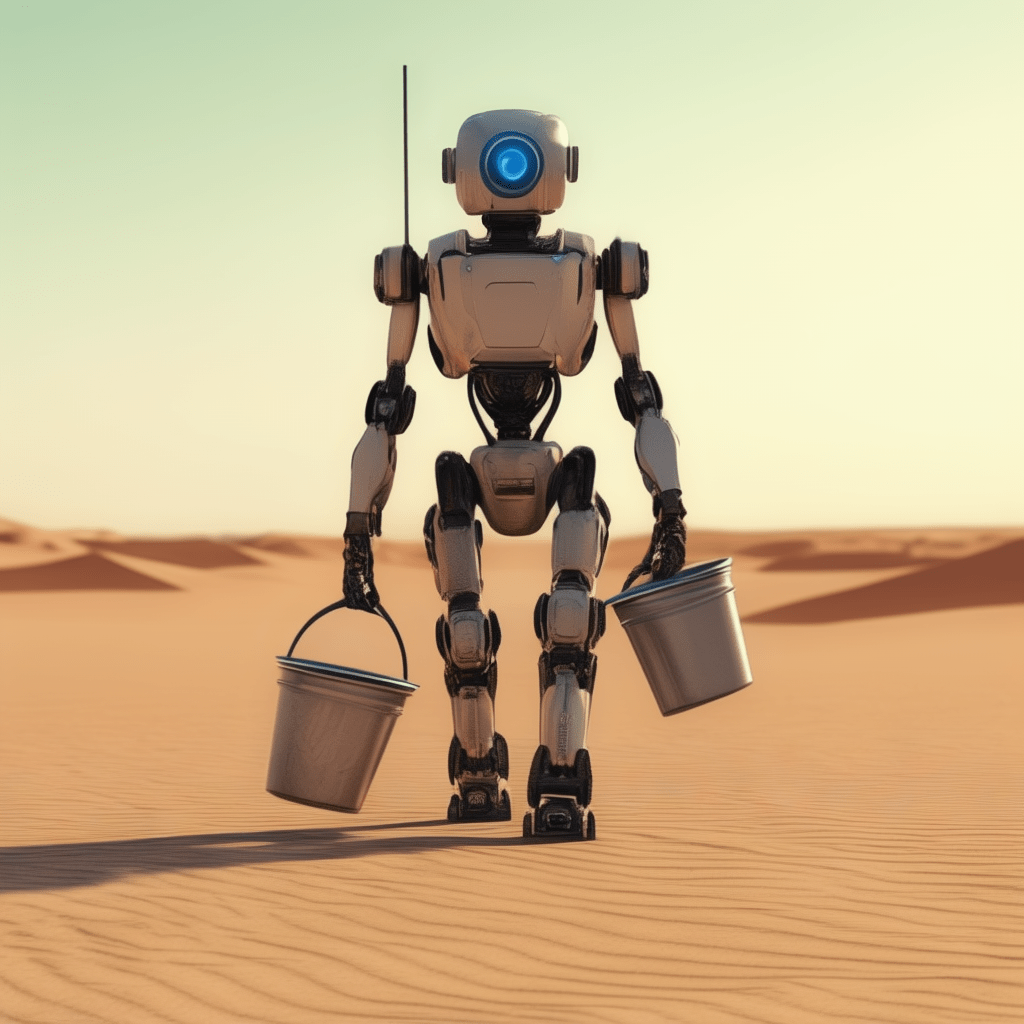
A few weeks ago, I wrote an article, AI, World Hunger, and Wars, addressing a question I came across during my morning reading: Can’t AI eliminate world hunger and war? The gist of that article was that human behavior impacts many of the challenges we face today and there is only so much that technologies like AI can do to help. But when it comes to addressing some of our most pressing problems,AI can certainly help.
Like other opportunities, it will eventually need human will and resolve to transform AI-powered solutions or recommendations into reality. Some of the critical areas that we need to address, like energy, global warming, and the water crisis, can definitely be addressed with the help of AI.
I came across this during my reading today:
“Thirsty’ AI: Training ****** Required Enough Water to Fill a Nuclear Reactor’s Cooling Tower, Study Finds | An average user’s conversational exchange with ****** amounts to dumping a large bottle of fresh water out on the ground, new research says”.
The fact is, using my computer right now is consuming water somewhere, but it is essential for my living. Similarly, training is an integral and essential part of AI solutions. Though we are still only scratching the surface when it comes to their applied usage, I am sure AI tools will help us transform the private and public sectors. And that includes helping us solve some of our pressing challenges, like the water crisis.
Here are some statistics from UNICEF about humanity’s water crisis:
- Four billion people — almost two thirds of the world’s population — experience severe water scarcity for at least one month each year.
- Over two billion people live in countries where water supply is inadequate.
- Half of the world’s population could be living in areas facing water scarcity by as early as 2025.
- Some 700 million people could be displaced by intense water scarcity by 2030.
- By 2040, roughly 1 in 4 children worldwide will be living in areas of extremely high water stress.
So how can AI help?
An area where attempts to leverage AI are already being made is to make water treatment facilities more efficient. This allows us to recover more and more usable water from wastewater. AI-enabled solutions are also helping us address ways to minimize water usage for cooling in Industrial setups.
All this is certainly useful, but it applies primarily to developed nations with wastewater plants and industrial bases that have an environmental impact. AI can certainly help them address their carbon footprint and other environmental impact.
But what about countries and regions that lack these water treatment plants? Can AI help address challenges in these regions as well?
We will explore this topic in the episode of Maverick Monday, which will be published later this evening. Stay tuned!

 Designed Analytics Blog