

This article is an excerpt from the Designed Analytics Report, ” Top Five Focus Areas : Data and Analytics” . You can download the report here.
Highlights from the report:
Excerpt
An article I wrote in early 2023 suggested that organizations should focus on building a data foundation in 2023. Having that foundation essentially takes care of a foundational strategic capability that can help accelerate any form of digital transformation. It is like putting together a custom canvas. It is difficult to build this canvas from scratch, but once you have it, the possibilities of what you can paint on it are plenty.
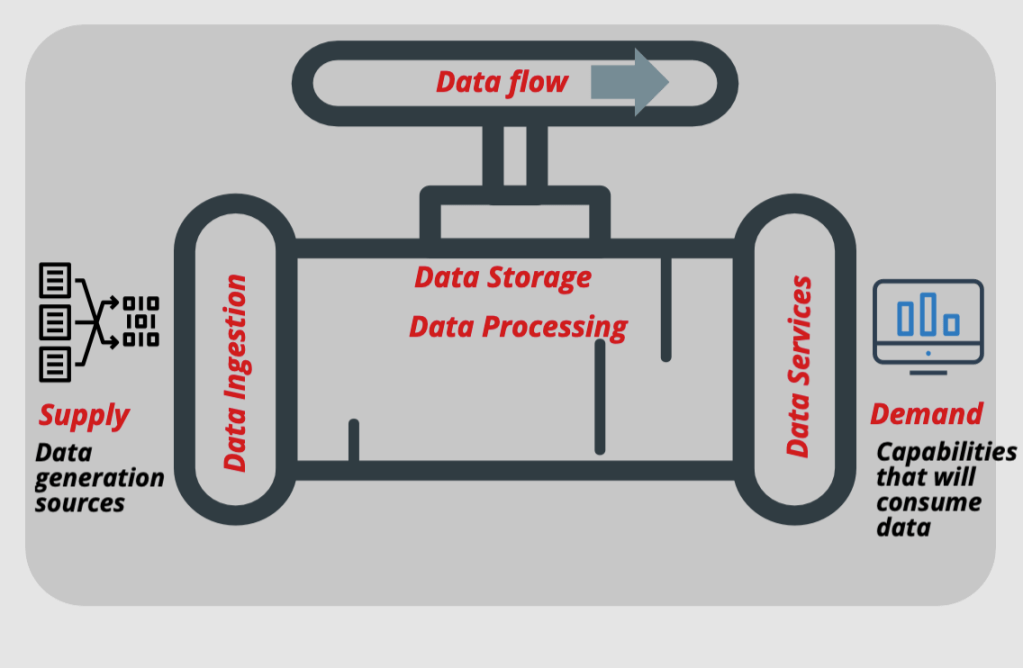
The challenge many organizations run into is how to think about building a data architecture strategy. Since we are already talking about canvases, let me suggest a data canvas method, as shown in Figure 4.
Your current and future state data generation sources are at the far left end of the data canvas. At the far right is your vision to leverage that data, i.e., capabilities that you want to build, leveraging that data. So, essentially, you have supply and demand on both extremes, and you want to build an optimal “supply chain” to connect demand with supply. That blank portion between these two is your canvas.
But it is not that you have to strategize everything in between. We know what architectural elements need to fall between the two ends, as shown in Figure 4.
Your data must flow from the source(supply) to the demand, which are the digital capabilities that consume the data. Just like supply chain flows, there are many intermediary entities to aid that flow. You have to formulate your data ingestion capabilities, storage capabilities, and the data services you will need before the data reaches the final consumption point. And as you may have inferred from the first focus area, your corporate strategy elements, which interface with technology strategy, will eventually provide inputs to fill in the canvas in Figure 4.
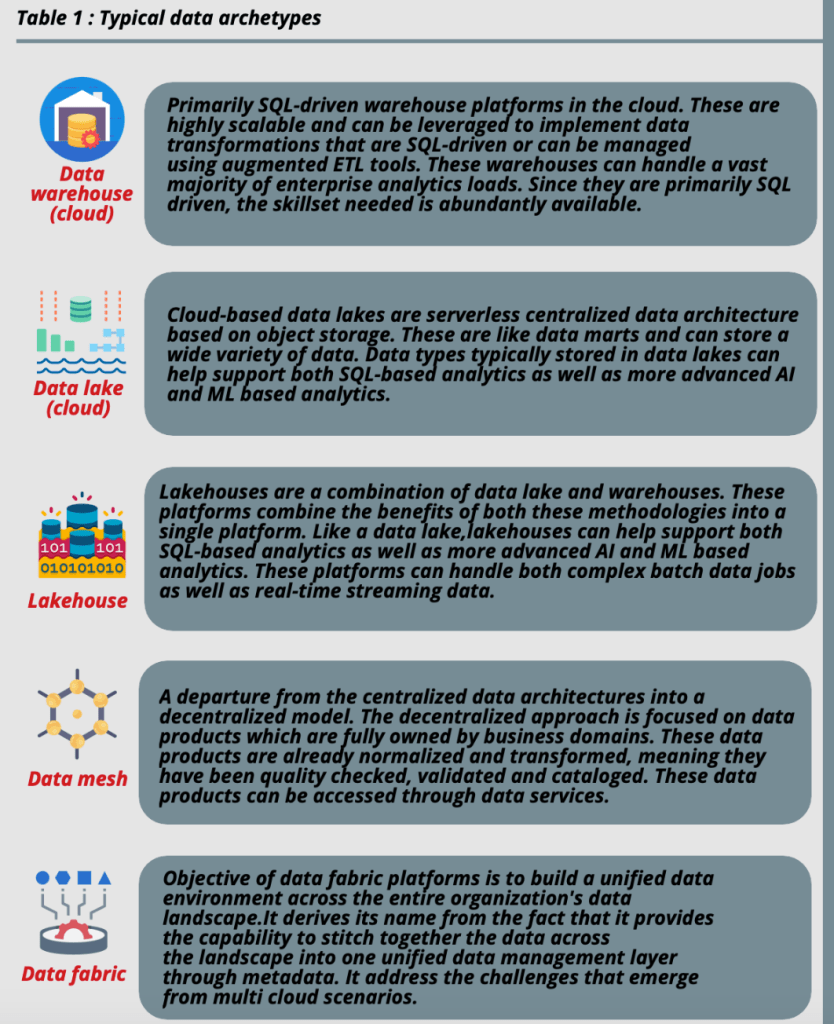
In some cases, an existing data architecture archetype may be a perfect fit as well.
Also, you can leverage more than one archtypes in your overall architecture. Regardless, it is important for you to understand the most commonly leveraged archetypes. Some examples of typical data archtypes have been illustrated in Table 1.

 Designed Analytics Blog