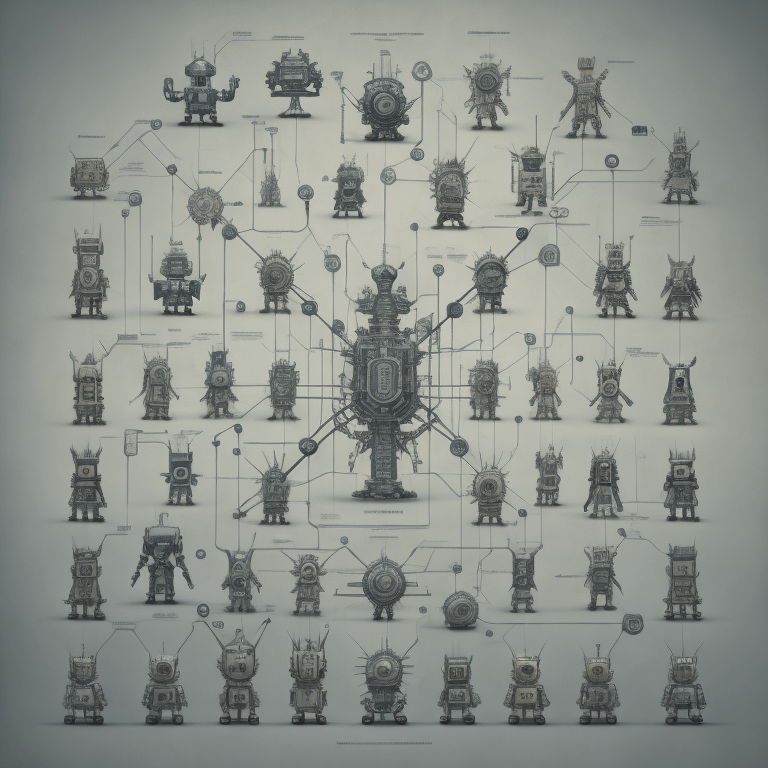
Supply chain networks have always been visualized as networks of interconnected nodes. As supply chains rapidly advance on digitalization journeys, we can imagine these nodes as sources constantly generating data. Depending on the size of the company and the volume of the operations, the amount of data generated by these nodes may vary. However, this landscape of a plethora of nodes generating data through a portfolio of systems leads to many challenges when building supply chain analytics capabilities.
Data fragmentation is a crucial challenge, followed by analytics fragmentation. Give me any company ranked as a “Top Supply Chain” company, and I can highlight fragmentation points in these two areas. There is not a Fortune 500 company out there (yet) that has been able to completely eliminate data and analytics fragmentation. Eliminating this fragmentation is imperative to building some of the more advanced capabilities the industrial world will eventually land upon.
Remember that eliminating fragmentation does not always mean having just one system or one data source. It means having “one-view”. A standard view of data and insights across the organization. We are more than a decade away from the scenario of a single-enterprise system running anything and everything across an enterprise (Though a sidebar, if I were an enterprise software company, I would make this a side secret project).
A challenge that plagues us is that if we can’t physically build a single view, how can we achieve that through frameworks? On the data side, we have seen many attempts and frameworks like data mesh that seek to embrace the reality that data will permanently reside in many different sources. We have not seen that much traction on the analytics side, though. In this article series, we will first overview the journey of attempts to build a unified analytics view and then understand how the most recent paradigm of Distributed AI can help supply chain analytics.
Before we begin, if you are looking for a concise overview of Distributed AI, I suggest this video from IBM Research. Nirmit does a great job explaining the evolution. This article will start by covering that journey from a supply chain perspective. We begin by understanding how supply chains have benefited from the cloud and the challenges that leveraging a cloud-based analytics approach can create in a supply chain context.
For decades, the supply chain was considered a backend function. One impact of this perception, which still haunts many companies, is that supply chains were not the top priority when it came to investment in digital tools. Then, as supply chains started gaining prominence during the last decade, another key technology proliferated rapidly- the cloud. For organizations looking for salvation from legacy and obsolete supply chain solutions, the cloud seemed to be faster and more efficient. While migrating and standardizing supply chain systems and solutions to the cloud, the technology world saw both emergence and rapid advancement in AI. The cloud seemed like a great place to build AI-enabled supply chain capabilities. And it was indeed!
Most organizations embarked on the journey to build those capabilities. This is the stage most companies are at currently. This is a big step jump for organizations that have long neglected to invest in building world-class supply chain solutions. Undoubtedly, this is a foundational step towards eliminating the two key challenges I have identified above: data and analytics fragmentation. A high-level architecture of how this level, or cloud-based AI solution capabilities work, has been shown in Figure 1.
Figure 1: The Cloud AI Approach
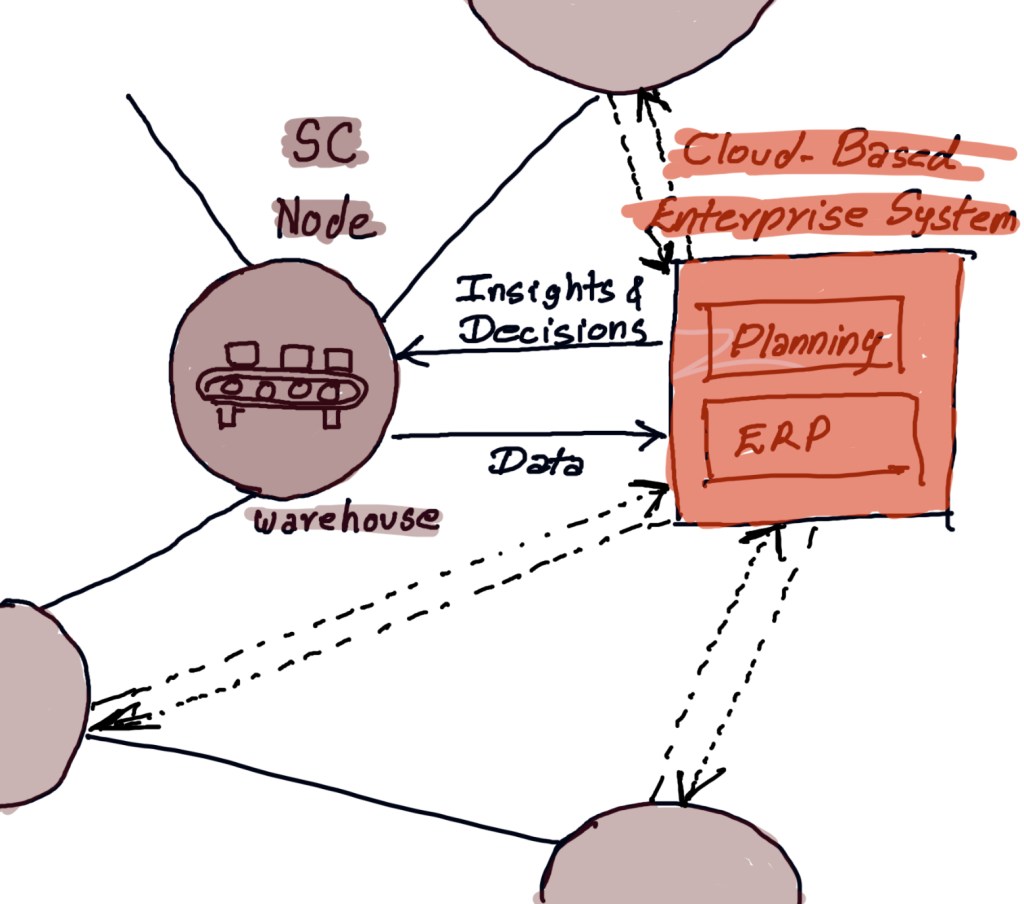
In addition to challenges pertaining to data, there are also latency challenges, data, insights, and decision latencies. Then, you also have the challenge of shared insights. Since supply chains are interconnected, these insights do not need to return to the source. The insights need to be shared across nodes. So, while this is an initial step to build a digital supply chain, this is just a first step.
In the second part of this article (scheduled to publish on 11/15), we will discuss how Edge AI addresses the challenges currently being faced by the current Cloud AI model. In the third and final part of this article, we will explore how Distributed AI is the future of digital supply chains and will be leveraged by best-in-class companies a decade from now.


 Designed Analytics Blog