
One of the critical applications of IoT in manufacturing and operations that we keep hearing about is predictive maintenance. When planned, modeled, and executed correctly, it is a powerful capability to build. If you have ever worked on manufacturing floors, you are probably pretty familiar with the impact of machine breakdowns on manufacturing operations.
According to a research by Chemical Processing magazine, only 27% of respondents reported high or very high rate of success. So the reality is, even though theoretically, the logic seems simple, proper planning, structuring, and execution are critical. In this post, we will discuss some aspects of predictive maintenance initiatives.
The IoT data flow for maintenance: An example
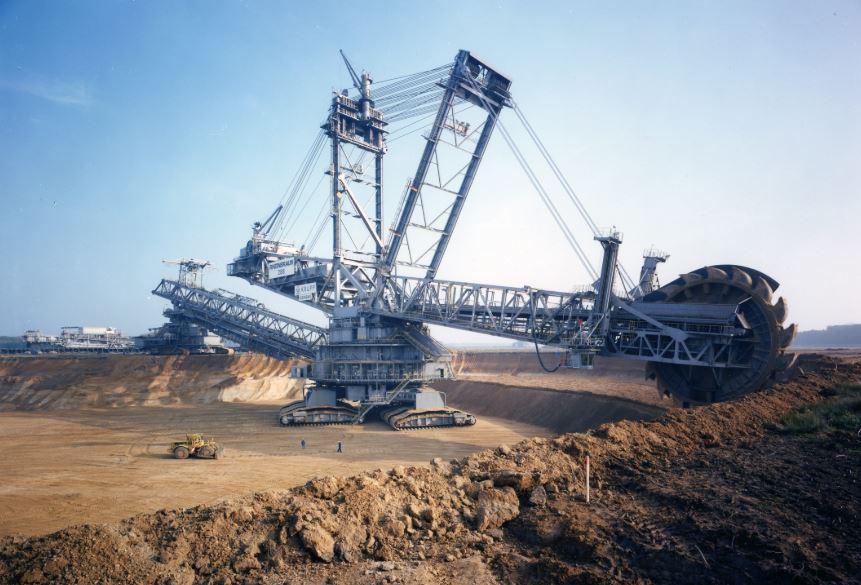
We assume we are an external consulting company, and an Australian mining company for operations consulting work has retained us. One of the aspects that they are struggling with is an unexpected breakdown of their critical mining equipment. They already have an architecture with sensors integrated with the mining equipment and a bucket wheel excavator (BWE) used in strip mining (see the picture below).
A typical bucket wheel excavator’s uptime is 40-60%, so there is always a significant opportunity to improve the uptime. The current model that the company is using is preventive or reactive. They also already have sensors installed on the equipment that relays the data. If something breaks, it is fixed; otherwise, maintenance is performed on a pre-defined schedule or, in rare instances, when sensor data indicate an anomaly.
Defining a value proposition
First, we must define the value proposition of leveraging IoT in this scenario. The value proposition here is to increase uptime and eliminate unscheduled downtimes.
Defining a model
To define a model, you need to understand the key aspects that must be monitored to predict failures. Now since we have intelligent consultants in our hypothetical consulting company who have a mechanical engineering background, they have identified the following three parameters that will be dependent variables in our model:
- Temperature
- Friction
- Stress and strain
The consultants then determine that these parameters are functions of other variables and capture them as shown below:
- Temperature = f(load, angular velocity, vibration frequency)
- Friction = f(torque, temperature)
- Stress/Strain (Remember Young’s modulus?) = f(force 1, force 2, …….force n)
Note that sensors installed on our BWE will help us capture the variables like load, angular velocity, etc.
Application of the model: Proactive and Predictive maintenance
Proactive Maintenance
Data generated by sensors can be used to take proactive measures to ensure that the three critical parameters above always remain within a reliable range. For example, if the joint temperature is between 68 and 230 degrees Fahrenheit, the probability of failure is temperature-related failures are minimum. Still, if it is over the maximum range limit, an actuator can proactively actuate water jets to cool the joint temperature.
Predictive Maintenance
This is the nirvana application of sensor data- leveraging the models formulated above and historical failures data to predict future failures. This can be realized with predictive analytics, which tries to recognize a failure signature in the data of the part in question. It will predict that the part, let us say the joint in our example, will fail if recognized. We need a long enough history of the same part to have a statistically relevant cause-and-effect model.
Summary: The value proposition chart for smart maintenance
Objective: Maintain assets better
Models:
- Temp= f(load, angular velocity, vibration frequency)
- Friction = f(torque, temperature)
- Stress/strain = f(force 1, force 2,…..force n)
Applications
- Use the rules engine to highlight if variables are outside the norms
- Remotely actuate cooling or lubrication
- Remotely modify operating software to limit lift
Analytics
- Predict failures by interpreting model variables over time
- Prescribe change to be actuated in the product to avoid future failures

 Designed Analytics Blog